Transforming Routine Tasks into Strategic Impact with Scheer PAS

How Saarland Police elevated efficiency by automating accident reporting
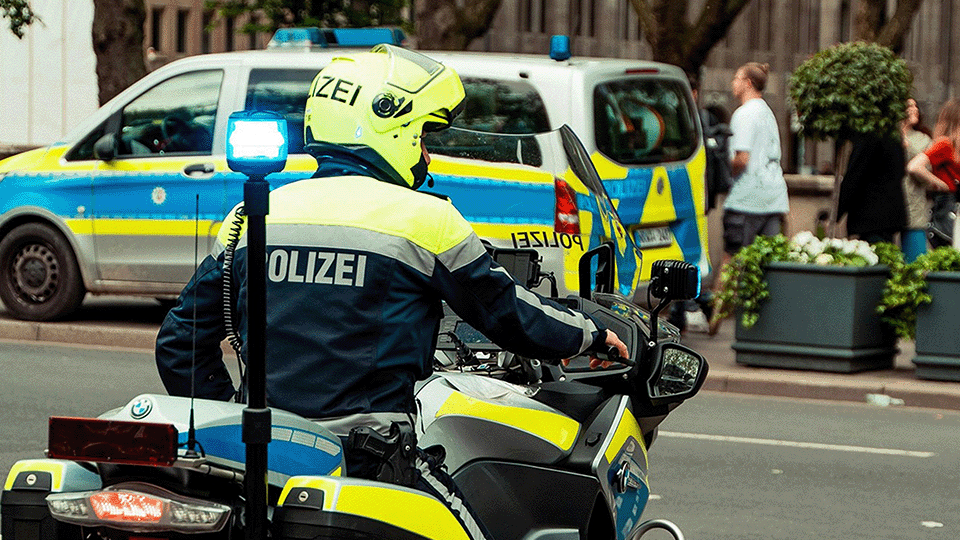
Saarland state police officer on a motorbike

AI delivers new efficiency for complex public-sector workflows

Rising workloads and increasing process complexity are pushing public‑sector teams to look for smarter ways to manage routine checks. As demonstrated by the Saarland State Police, AI-powered automation offers a practical, security-compliant way to relieve highly qualified staff from time-consuming, repetitive tasks.


With Scheer PAS, over 80% of accident-report plausibility checks are now automated, delivering measurable time savings, fewer errors, and integration with existing IT systems. This case provides IT leaders with a template for immediate impact and scalability.

80%

Reduction in manual effort per plausibility check

>35,000

Accident reports/year checked by AI

0%

Identifiable personal data processed, ensuring compliance and security

The challenge

Manual checks strained expert resources and increase the risk of errors

The Saarland State Police struggled with a growing volume of routine manual work: plausibility checks for traffic-accident reports required time-consuming, error-prone processes carried out by highly qualified staff. As case complexity increased and recruitment challenges mounted, the risk of bottlenecks and mistakes grew. Multiple, unintegrated tools created information silos and duplicated effort, driving up workloads and reducing data quality. This type of scenario is increasingly common in the public sector across DACH regions today.

The solution

End-to-end AI automation for seamless integration and scale

Scheer PAS designed and implemented a deep learning-driven plausibility check, seamlessly integrated into existing police systems (e.g., POLADIS). The platform automatically processes reports, classifies accident causes and types, and only escalates more ambiguous cases for manual review. This modular, low-code solution rapidly delivers results without touching personal data, ensuring total compliance within a secured infrastructure. The outcome: scalable automation that flexibly supports broader digitalisation strategy.

The result

Superior quality, massive efficiency boost, and future readiness

Manual effort per accident report has fallen by over 80%, freeing expert staff for higher-value work. AI ensures consistent, high-quality checks and drastically reduces errors. With more than 35,000 reports processed annually, the police now benefit from a modern digital core that eliminates the need for manual handovers and fragmented workflows, while ensuring full complianceThe successful rollout delivered clear impetus to expand AI-powered automation to other tasks across the organisation.

What’s next

Expanding process automation beyond police operations

Building on proven results, the Saarland State Police are already exploring additional automation opportunities. Any process characterised by high standardisation and complexity is a candidate for Scheer PAS, whether in public administration or elsewhere. The same AI, low-code, and secure integration principles enable rapid adaptation and scale in diverse DACH-region organisations facing similar challenges.

"With this AI-aided plausibility check of accident reports, we are relieving our highly qualified staff of important but monotonous work, while at the same time ensuring high quality and efficiency. This makes our work easier despite tight personnel resources and increasing case complexity. We’re becoming even more professional."

Klaus Bouillon, Former Minister of the Interior of Saarland

See how industry leaders use Scheer PAS in practice