


Why “Time-to-Value” Is Becoming the Key Metric of Digital Transformation
Digitale Transformation ist heute in nahezu jedem Unternehmen ein zentrales strategisches Thema. CIOs, CDOs, Heads of AI und CAIOs treiben Initiativen voran, um Geschäftsprozesse zu automatisieren, datengetriebene Entscheidungen zu ermöglichen und künstliche Intelligenz in die operative Wertschöpfung zu integrieren. Doch unabhängig von Branche oder Unternehmensgröße zeigt sich immer wieder dasselbe Muster: Die Anzahl der Ideen und Initiativen wächst schneller als die Fähigkeit der Organisation, diese umzusetzen.
The Growing Digitalisation Backlog
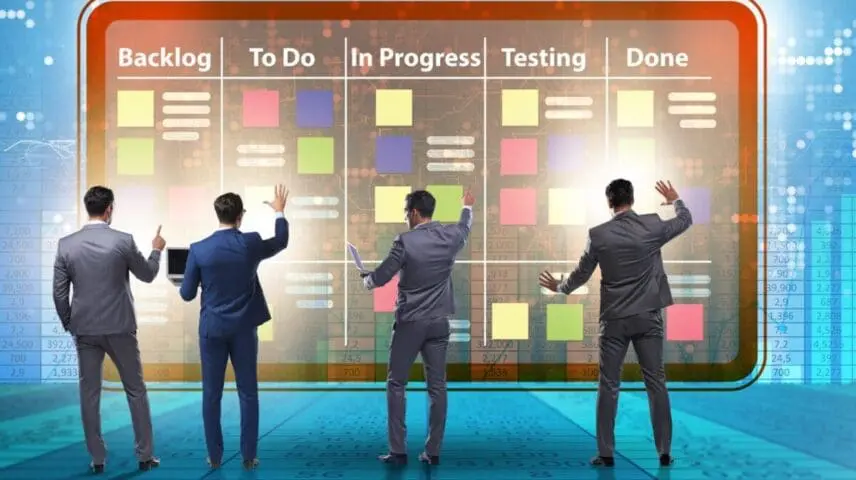
Many organisations now have an extensive backlog of initiatives:
- Process automation
- AI initiatives
- Data platforms
- Integration projects
- Internal applications for business departments
- Modernisation of existing systems
Every department recognises the potential of digital technologies to accelerate processes or unlock new opportunities. The problem is not a lack of vision. The problem is implementation capacity..
Digitalisation teams today are under significant pressure. At the same time, they must:
- Operate existing systems
- Evaluate new technologies
- Enable AI initiatives
- Ensure governance and compliance
- Build trust across the organisation
- Implement projects requested by business departments
Newly established digitalisation teams in particular operate in a challenging environment. They are expected to deliver results while simultaneously building the organisational foundation for digital transformation.
The result is a structural bottleneck. The backlog continues to grow, while expectations for faster implementation keep increasing.
The New Reality of Software Development

At the same time, a technological development is fundamentally changing the playing field. Large language models specifically trained for code generation are evolving rapidly.
Today they are capable of:
- Generating complete services
- Creating integrations
- Developing user interfaces
- Writing test cases
- Supporting deployment pipelines
With the same resources, organisations can now implement significantly more solutions than just a few years ago. The barrier to entry for software development is decreasing. But this is exactly where a dangerous misconception emerges. Because Software zu bauen, ist nicht dasselbe wie Enterprise-Software nachhaltig zu betreiben.
Sustainable Software Is Strategic Infrastructure
Anyone who has operated an application in production for several years knows: The first release is only the beginning.
Enterprise software must continuously:
- Be extended
- Be maintained
- Be connected to new systems
- Meet compliance requirements
- Run reliably
- Scale
A prototype can solve a problem quickly. But without a solid architecture, it quickly becomes a long-term burden. In many organisations, this creates a new problem: Maintenance effort eventually exceeds the original development effort.
Software Investments Are Strategic Investments
Companies often still treat software projects like traditional IT projects. But software has long since become strategic infrastructure. The comparison with industry is fitting.
When a manufacturing company purchases a new production machine, several key questions are asked:
- Can the machine increase production output?
- Does it improve quality?
- Can it open up new customers or markets?
- Will the investment pay off in the long term?
The same questions must also be asked when investing in software. The real ROI is not created by prototypes. It is created by stable, productive systemsthat continuously deliver value.
The Missing Platform Layer
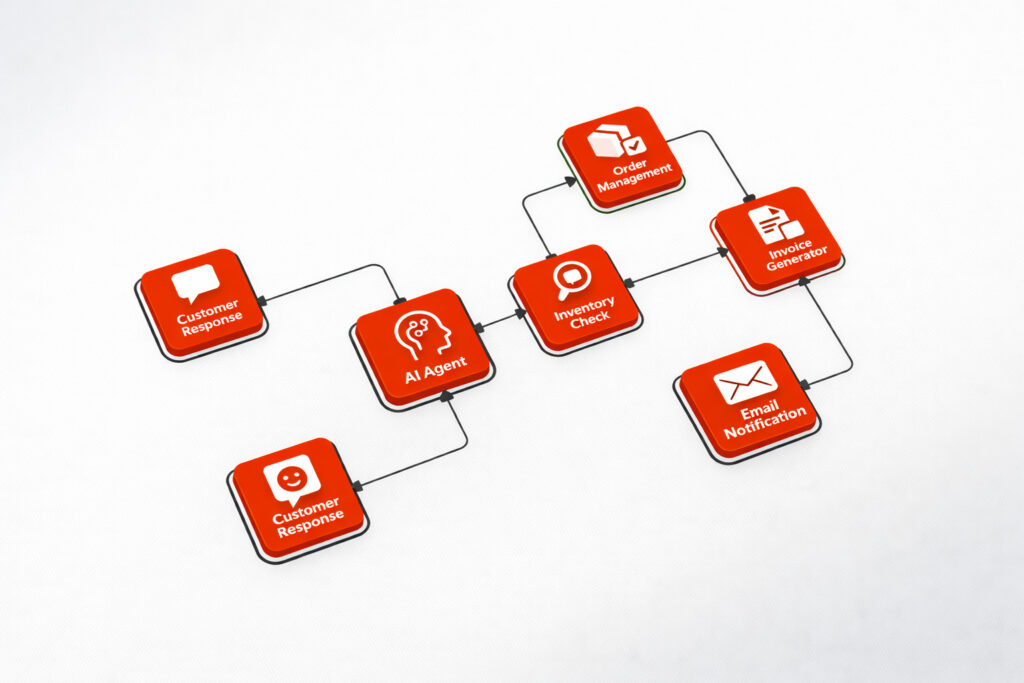
Many organisations are currently trying to address their backlog solely by accelerating software development. However, speed alone is not enough. What is missing is a platform that orchestrates the entire digital transformation.
Such a platform must cover several dimensions:
- AI-assisted development
- Integration of existing systems
- Process automation
- Orchestration of AI agents
- Governance and compliance
- Operations and monitoring
Only when these elements work together can organisations sustainably implement their digital initiatives.
Time-to-Value Becomes the Key Metric

The central question is therefore no longer: “Can we build this solution?” With modern AI tools, the answer is almost always: yes. The crucial question is: How quickly can we turn an idea into real business value?
In many organisations, the journey from
Idea → Prototype → Productive Software → Business Impact
still takes months or even years.
In a world of exponential technological development, that is simply too slow. Companies that reduce their time-to-value gain a significant competitive advantage.
Agentic Process Orchestration as an Approach
Agentic Process Orchestration combines several crucial elements:
- AI-assisted development
- Enterprise Integration
- Process automation
- Orchestration of intelligent agents
Instead of building isolated solutions, this approach creates a platform that enables organisations to systematically implement digital initiatives.
How Scheer PAS Supports Companies
At Scheer PAS, we support organisations exactly in this scenario. Companies face the challenge of implementing a large number of automation and digitalisation initiatives.
Our platform enables organisations to:
- Develop solutions faster
- Seamlessly integrate existing systems
- Orchestrate processes across system boundaries
- Deploy AI-driven automation productively
The key effect is clearly measurable:
Time-to-value decreases dramatically.
Conclusion
Digital transformation is no longer a question of ideas. There are plenty of ideas. The decisive factor is execution speed. Companies that can turn their backlogs into productive solutions will be the winners of the next decade. Digital leadership today therefore means one thing above all:
Consistently reducing time-to-value.
More information about using Scheer PAS AI Agents can be found here.