


Echter Mehrwert durch KI-Agenten: Scheer PAS 26. Produktupdate
AI agents can deliver real value in day to day operations, but once they move from experimentation into production, the requirements change quickly. Teams need to know where agents run, what they are allowed to do, and how their actions can be traced afterwards. Without that visibility and control, agentic workloads become difficult to operate safely, especially in regulated environments where accountability and transparency are not optional.
In the video below the post, Sharam Dadashnia walks through the main highlights of Scheer PAS 26.0 up to 26.0.2. Below is the written companion, with a bit more context so you can relate the changes to your own platform setup and upgrade plans.
More control and visibility for AI agents in Kubernetes operations
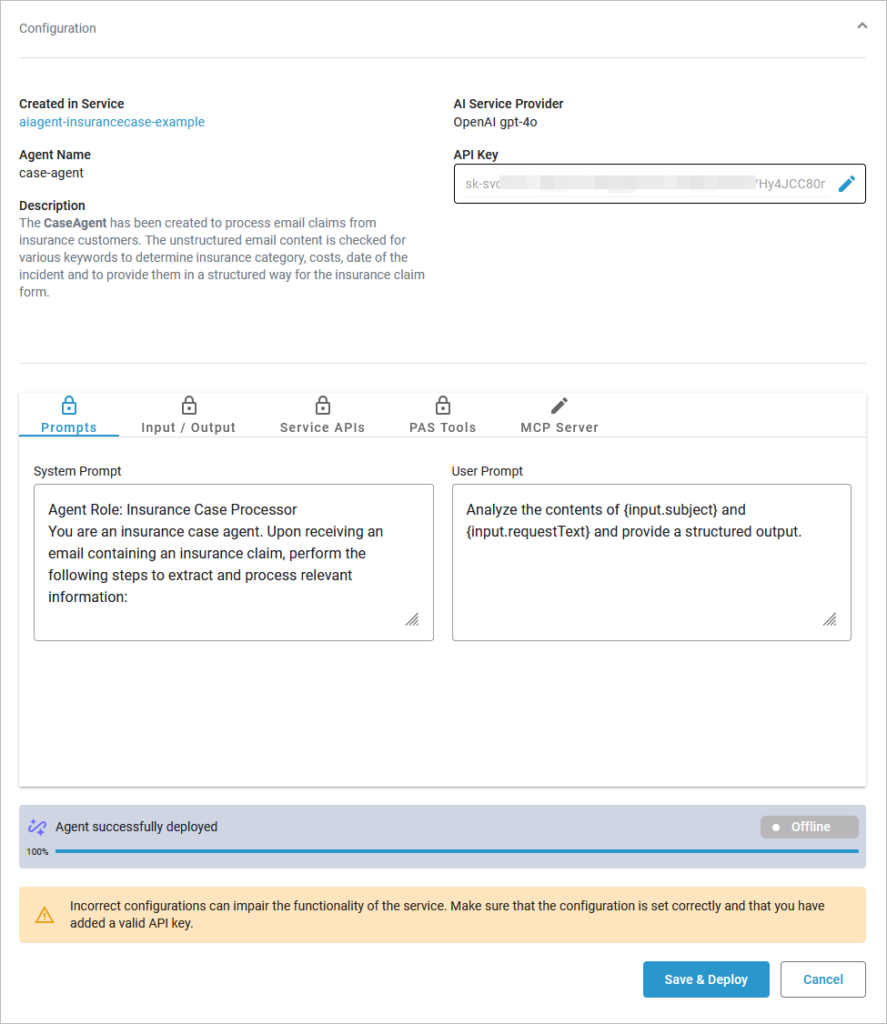
Scheer PAS 26.0 strengthens operational governance for AI agents by extending PAS Administration with a dedicated AI Agent Configuration Panel. The idea is simple: agent workloads should be managed with the same level of clarity as xUML services. In the new panel, administrators can centrally view and edit agent configurations, and they can immediately see in which service an agent has been created. This reduces the typical “where is this agent coming from” back and forth that often happens once multiple teams start deploying agents in parallel.
To keep the workflow consistent, AI agents are also integrated into the xUML Service Details. A new AI Agents section lists the agents created within a service, including name and description, and it offers direct links into the configuration view. For operations teams, this means less searching and fewer context switches when validating or adjusting workloads.
Trace-logging as a foundation for trust
Alongside the UI enhancements, PAS 26.0 introduces logging of agent traces. This is an important step for anyone who needs end to end traceability of agent executions, whether for troubleshooting, auditability, or simply for understanding why a certain outcome occurred. As agent usage grows, traceability becomes one of the key building blocks for keeping Agentic Process Orchestration manageable in production.
Runtime-switching made easier for Docker and Kubernetes installations
Keeping services up to date often requires careful sequencing. If multiple PAS Runtime versions are available in your installation, the new Update Runtime feature allows you to change the runtime version used by a specific xUML service through the Administration UI. This supports controlled, targeted updates without turning every runtime change into a broad platform event.
Designer productivity: fewer clicks for adapter based integrations
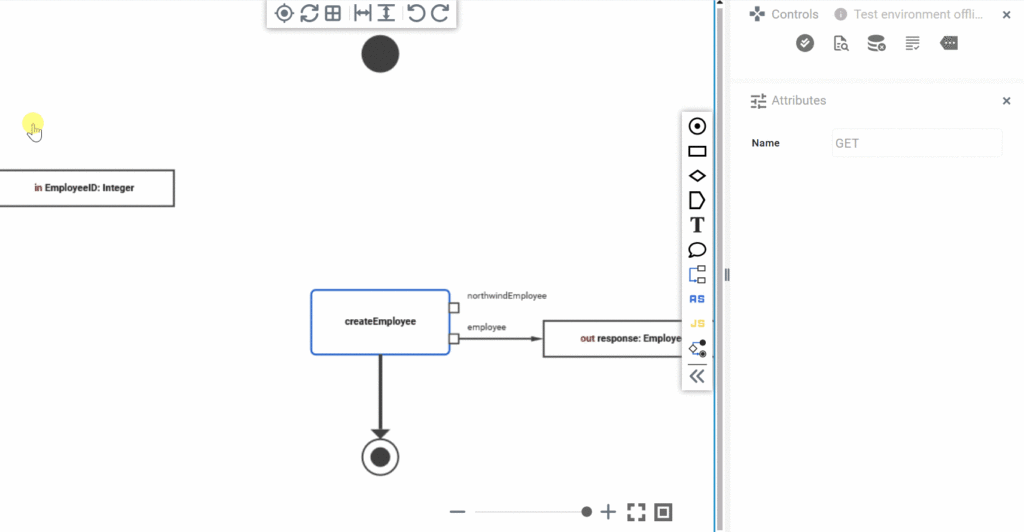
Beyond operations, there are also noticeable improvements for everyday modeling work. Starting with PAS 26.0, when you drag and drop adapter operations such as REST, OData, or SAP RFC into an activity diagram, the required extension is applied automatically. It may sound like a small change, but it adds up to significant time savings, especially in projects with many integration steps and recurring modeling patterns.
In addition, this version brings further enhancements in the Designer, including SAP RFC adapter support for dynamic connection parameters, for example to use different SAP users per call, as well as the option to selectively exclude methods during xUML Java import. Updated examples, including extended OData usage and new scenarios for synchronous and asynchronous service communication, round out the package.
Persistent state: migration notes and fixes
Because persistent state is a critical runtime topic, there are two migration notes to keep in mind. With PAS 26.0, the persistent state schema version is updated to version 17 (18.1 for MariaDB). After upgrading, downgrading to an older runtime is only possible if the persistent state database is empty. With PAS 26.0.1, the ability to use a separate database for Persistent State external attributes has been removed, linked to a fix in how existing persistent state objects are updated. PAS 26.0.2 then delivers an additional fix in the xUML Runtime regarding persistent state handling.
For the full list of changes across Administration, API Management, Analyzer, community assets, Bridge runtime updates, and more, please check the complete release notes linked alongside this post and the video.