Realise Efficiency Gains That Show Up in the Numbers
Improve the processes that drive cost, throughput, and control, without funding broad transformation programs with unclear return.
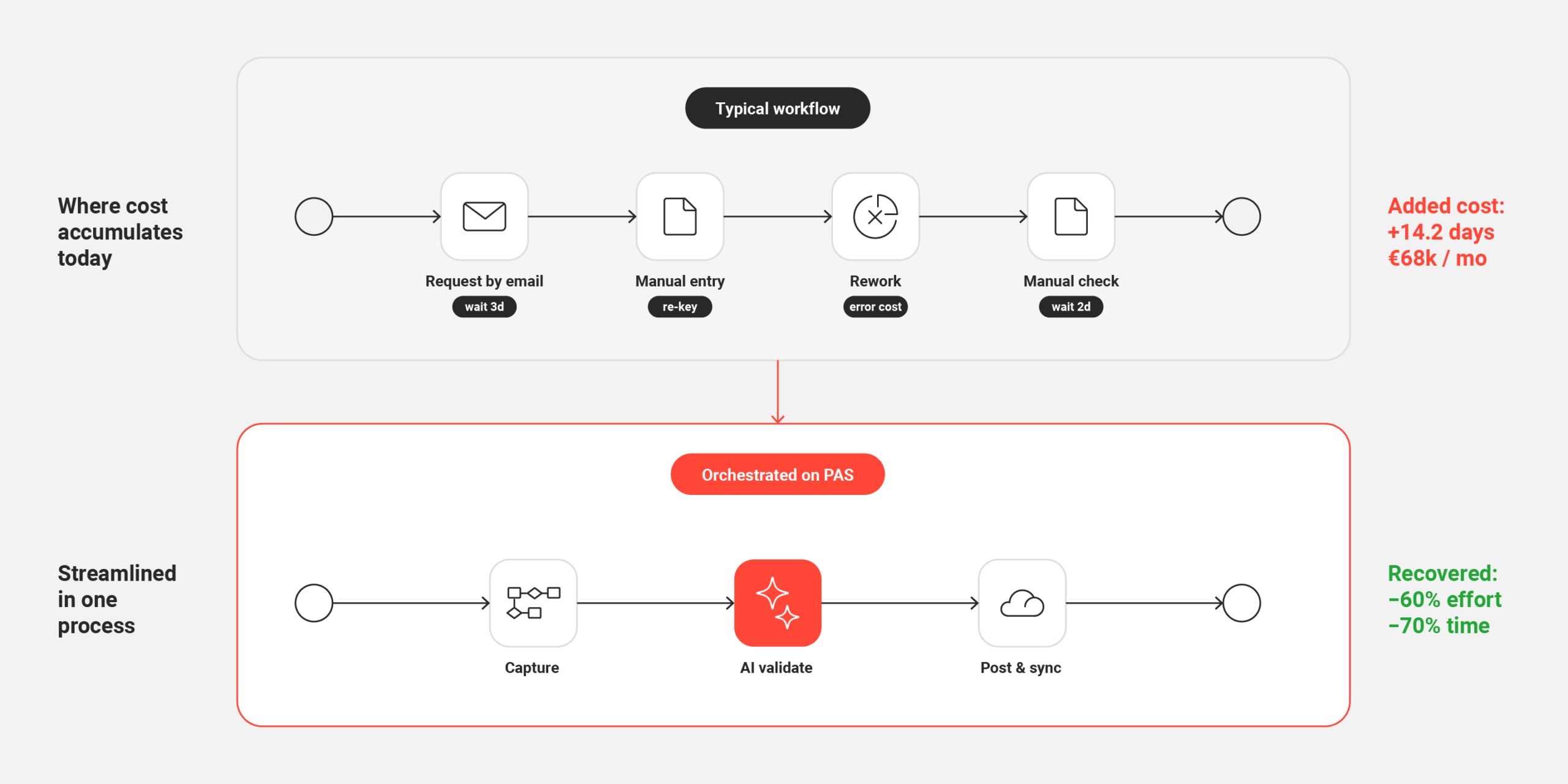
What Chief Financial Officers tell us…
“We do not need broader programs. We need savings we can actually measure.”
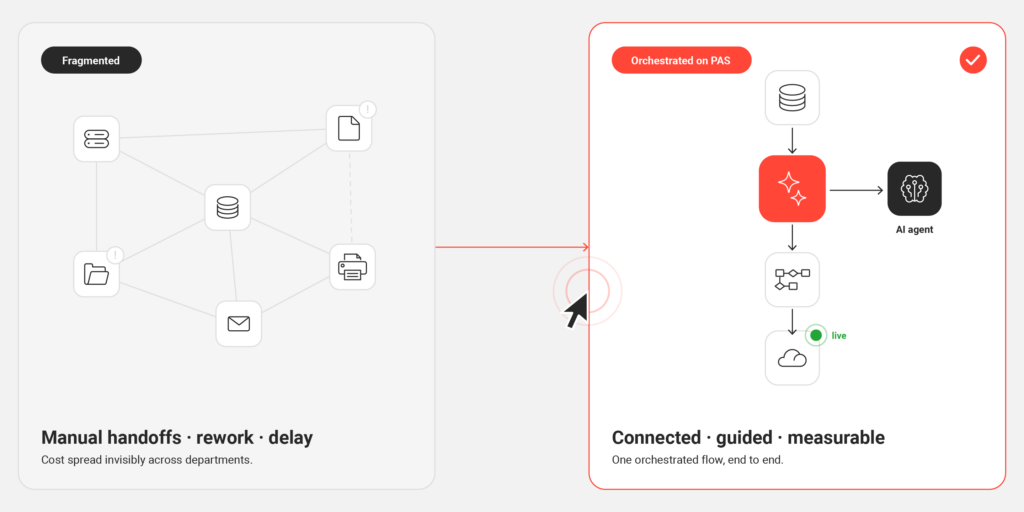
In many organisations, the biggest cost drivers are not isolated systems. They are manual handoffs, duplicated work, slow approvals, repeated data entry, and inefficient processes that run across departments. These costs are real, but they are often spread across day-to-day execution, which makes them harder to target and even harder to reduce with confidence.
“We cannot justify major investment without a credible path to return.”
Finance leaders are expected to support transformation, but digital programs are often too broad, too slow to show impact, or too unclear in where value will actually be created. What matters is not digitalisation in itself. What matters is whether the investment reduces operating expense, improves efficiency, and produces results the business can measure.
“Automation only helps if control, auditability, and trust stay intact.”
Faster execution is valuable, but not if it creates new compliance, audit, or governance risks. As automation and AI become part of enterprise operations, finance needs confidence that decisions remain transparent, traceable, and governed. Improvement only creates value when it remains under control.
A more practical path to measurable return

Optimise operations where the savings are real

Invest where ROI is visible
For CFOs, transformation has to justify itself economically. Investment decisions are judged by the same questions every time: where do we reduce cost, where do we improve efficiency, where do we lower risk, and where does the spend actually pay off. Broad programs with unclear financial impact make those questions harder to answer.
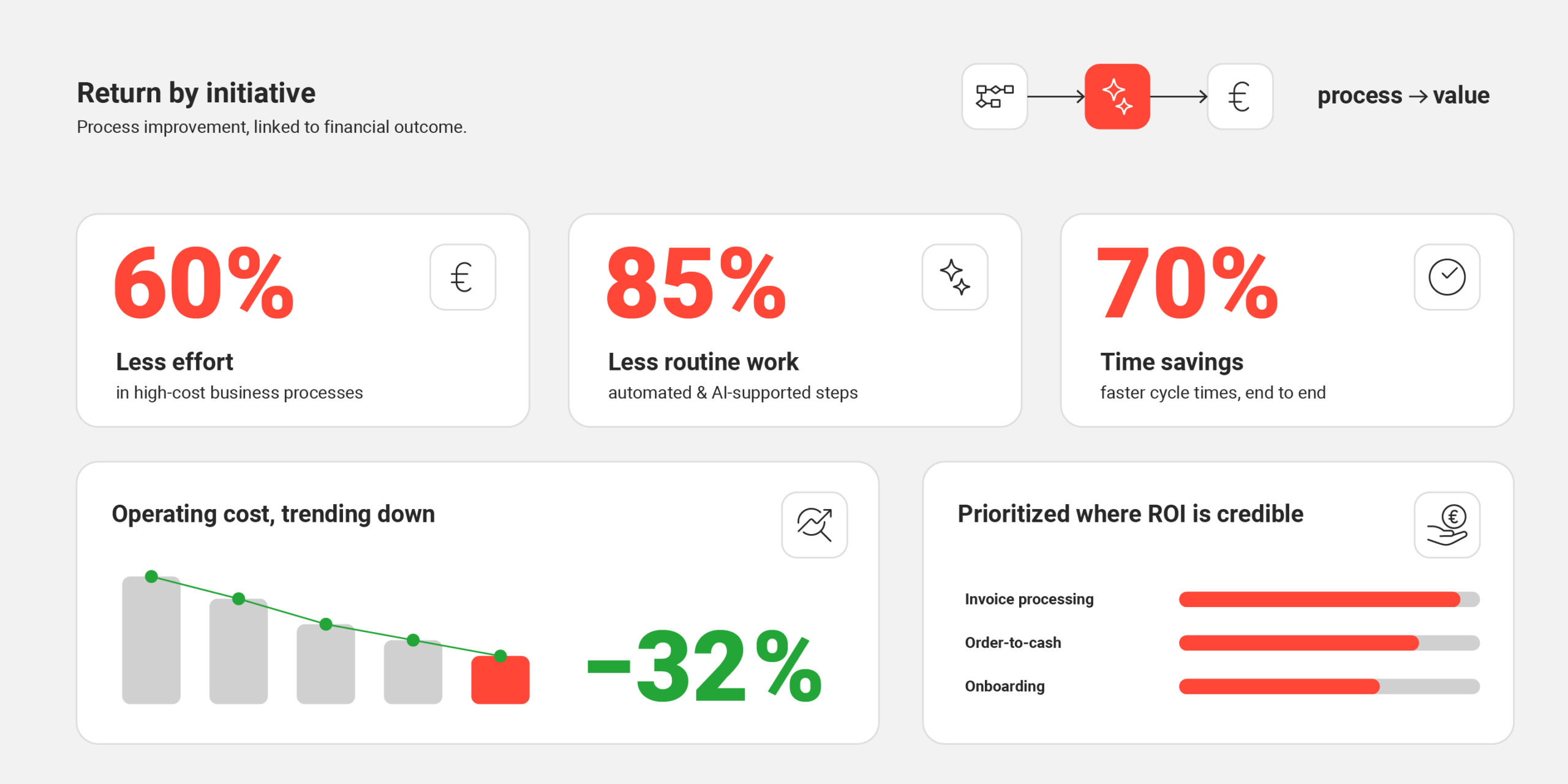
Scheer PAS supports a more targeted transformation model by helping organisations prioritise initiatives where cost pressure is high, process impact is measurable, and return is credible. Customer examples already show what that can look like in practice, including 60 percent less effort, 85 percent less routine work, and up to 70 percent time savings. This creates a stronger path from technology spend to business outcome and helps turn digital investment into visible operational and financial improvement.

Protect past investments while modernising selectively
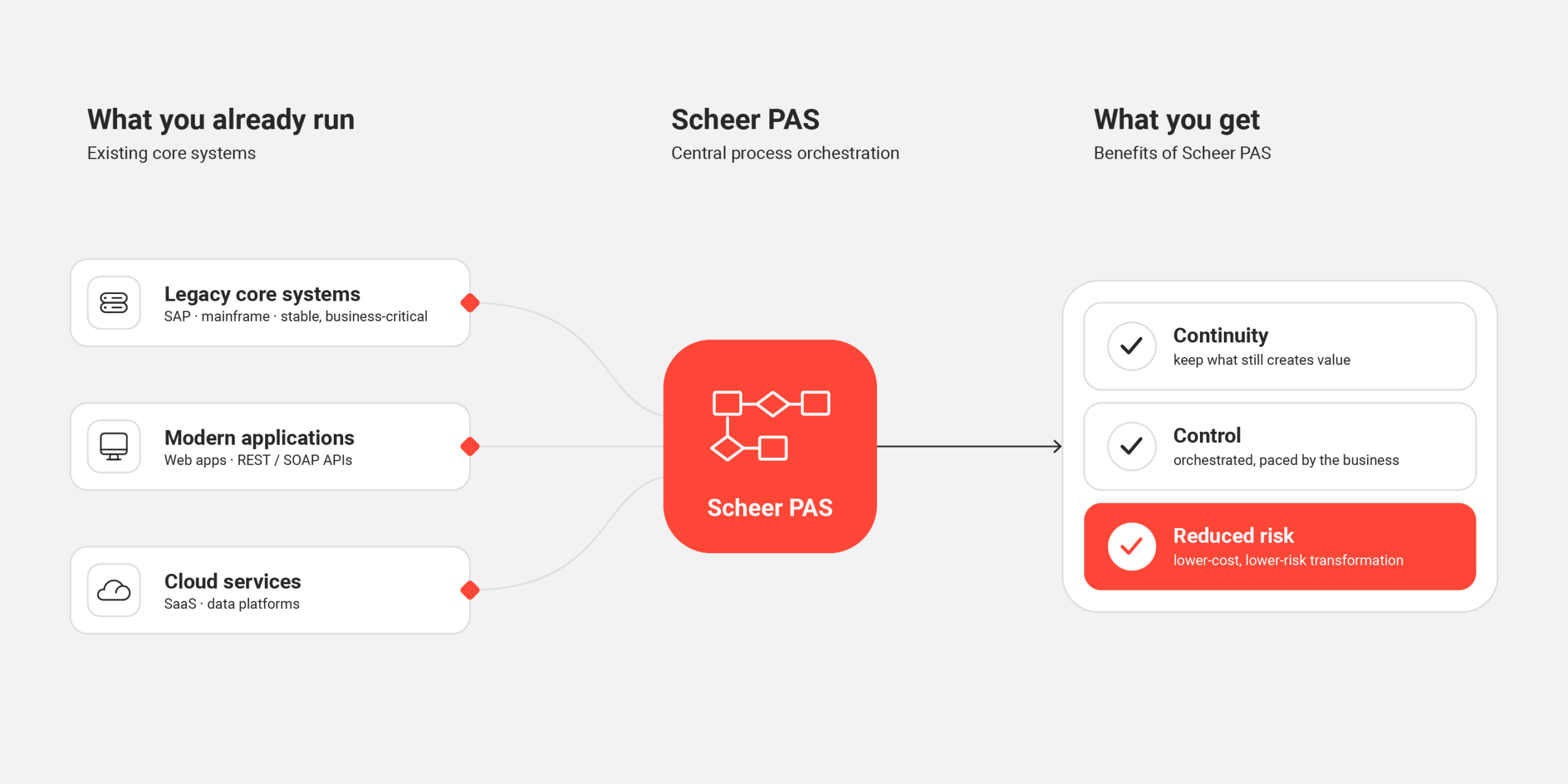
Stable core systems still support many business-critical processes, and replacing them wholesale is rarely the most economical option. The challenge is not to replace everything for the sake of modernisation. The challenge is to preserve what still creates value while reducing the cost, delay, and inflexibility caused by fragmented landscapes and redundant solutions.
Scheer PAS allows you to orchestrate legacy systems, cloud services, APIs, and modern applications within one process-driven environment. This gives you a smarter way to modernise, one that protects past investments, reduces application sprawl where it makes financial sense, and lowers the risk of costly transformation programmes. Modernisation becomes selective, controlled, and paced according to what the business can absorb.

Scale automation and AI with financial control
Automation and AI only create enterprise value when they can be governed. As organisations look for faster execution and better productivity, finance still needs assurance that processes remain transparent, decisions stay explainable, and controls are not weakened in the name of speed.
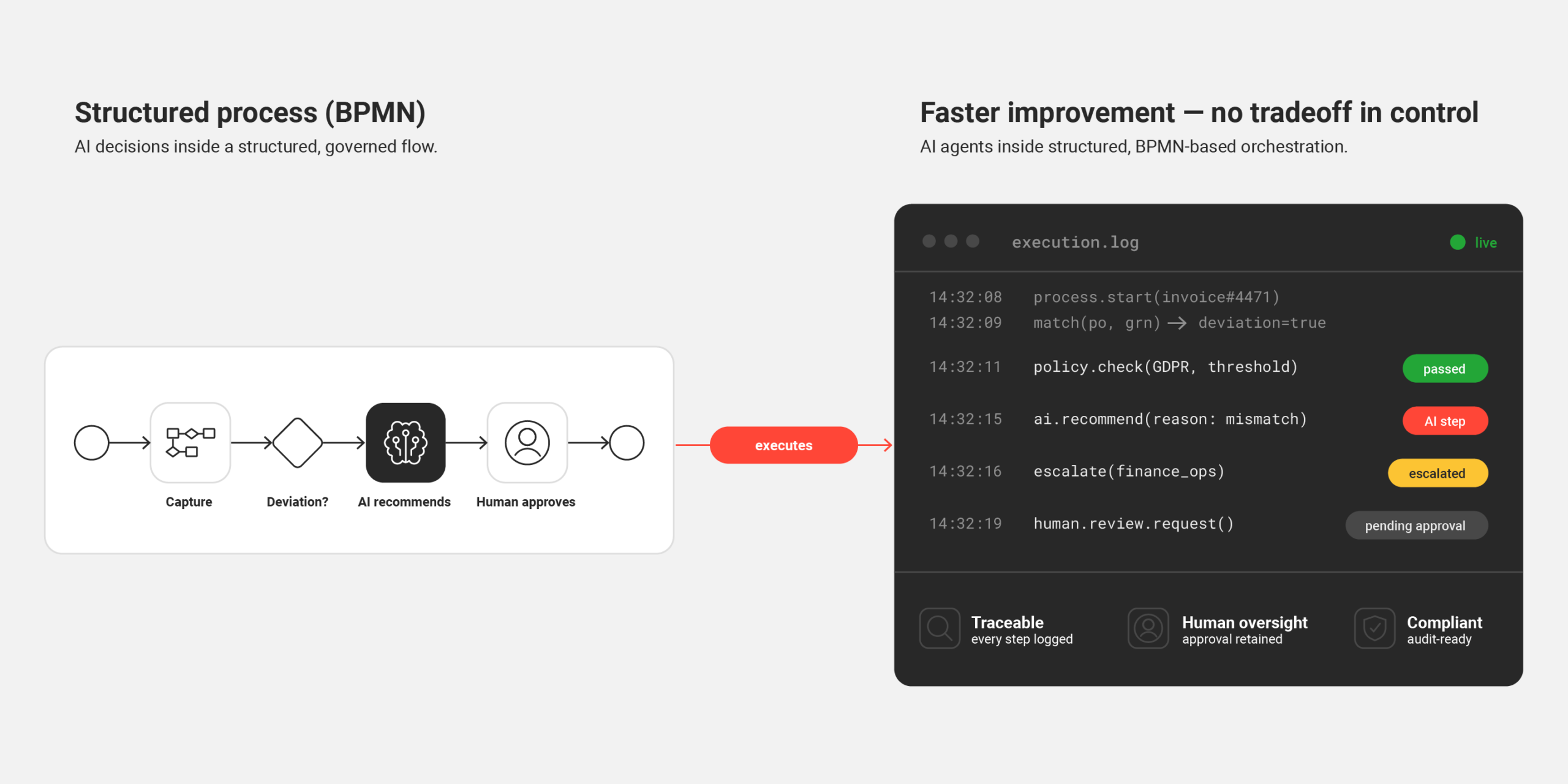
Scheer PAS enables organisations to embed AI agents into structured, BPMN-based process environments with clear orchestration, traceability, and human oversight. This helps finance leaders support automation with greater confidence because compliance, auditability, and operational transparency remain part of execution. The result is faster improvement without a tradeoff in control.
What this means for your organisation
With Scheer PAS, cost improvement becomes more targeted, more transparent, and easier to justify. Instead of funding transformation in broad waves, organisations can improve the processes where labor cost, coordination overhead, and inefficiency are most visible. That creates a more practical path to operational savings and a clearer connection between digital investment and business outcome.
At the same time, finance gains stronger visibility into how work is executed across departments, where costs are created, and how automation contributes to efficiency without weakening governance. The result is a more disciplined transformation model, one that improves performance, protects control, and turns process improvement into measurable return.
Reduce operating cost where it matters most
-
Lower manual effort in high-cost business processes
-
Eliminate redundant process steps, delays, and rework
-
Improve throughput and decision speed across departments
-
Target savings where labour and coordination overhead are highest
Turn digital investment into measurable return
-
Prioritise initiatives with the strongest business case
-
Create a clearer path from technology spend to financial outcome
-
Protect stable systems while reducing unnecessary replacement cost
-
Move from broad digital ambition to targeted value realisation
Improve control without slowing execution
-
Maintain traceability across processes, integrations, and AI-supported decisions
-
Support compliance, audit readiness, and enterprise governance
-
Scale automation with transparency and human oversight
-
Reduce risk while improving efficiency across critical operations
Key customer success story for CFOs

70% Faster IT integration and no-risk modernisation for dodenhof with Scheer PAS
See how dodenhof achieved leading integration agility and slashed time-to-market for IT projects transforming its complex retail landscape with Scheer PAS’ microservices, modular architecture, and safe migration strategy.
More resources
Where are the measurable savings hiding in your processes?
Six short questions on process cost, ROI and control. Answer openly and you will see where you stand.
6 questions, about 90 seconds
Where do the largest avoidable process costs arise in your organisation?
How well can you put a number on what a single business process costs?
How solid is the business case when a digital initiative comes up for approval?
What would need to be true before you would approve automation and AI more widely?
How much do you spend today on systems that overlap in function and cost?
How do you scope transformation work today?
Done. See where you stand.
Tell us where to send the read-out and we will show you your result. A Scheer expert can then walk through what it means for your business case.
Loading the form
The form could not be loaded
Please reload the page. If the form still does not appear, speak to an expert directly.
Talk to an expertThis is where the business case is clearest.
There are clear areas with solid savings potential.
Your cost base looks controlled. Worth a conversation as you scale.
Where Scheer PAS would help you most
Optimise where the savings are real
Scheer PAS brings workflows, systems, data, APIs and AI agents onto one platform. That cuts manual effort, clears bottlenecks and makes the cost drivers visible.
Invest where the ROI is visible
Initiatives can be prioritised where cost pressure is high and the return is realistic. Customer examples show 60 per cent less effort, 85 per cent less routine work and up to 70 per cent time saved.
Protect past investments and modernise selectively
Legacy systems, cloud services, APIs and modern applications run together in one process-driven environment, with application sprawl contained where that makes commercial sense.
Scale automation and AI under financial control
AI agents run inside structured, BPMN-based processes with clear orchestration, complete traceability and human control, so compliance and auditability stay part of execution.
See where the cost actually arises
Finance gains visibility into how work runs across departments and what automation actually contributes to efficiency, without weakening governance.