BLOG
AI Needs Team Days: Why We Deliberately Take Time to Shape the Future for Our Customers
July 7 | Sebastian Dietrich
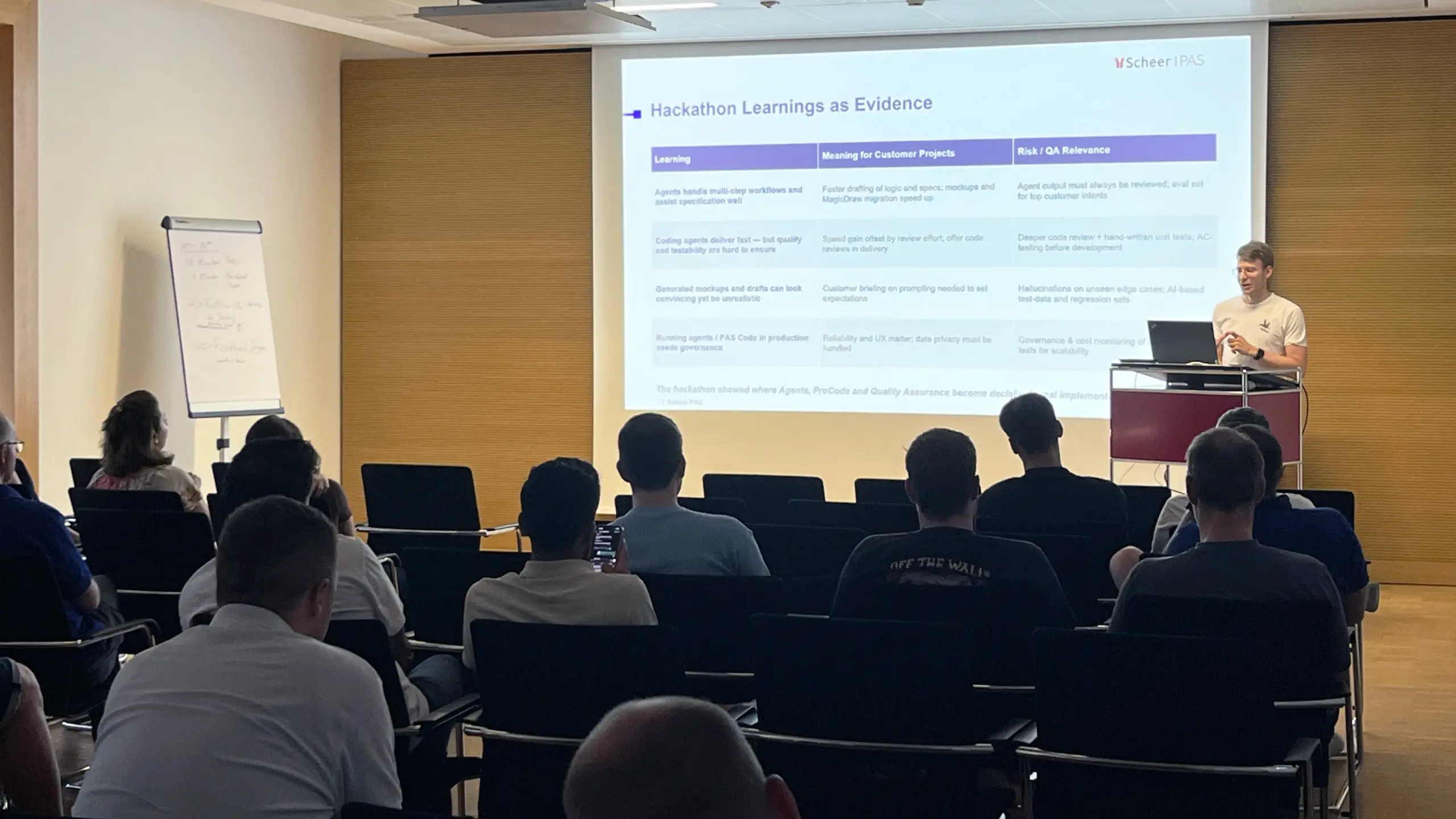
The pace of technological change in AI is currently faster than many companies can adapt their processes. New models, new tools, and new development methods are emerging every week. Companies that stay focused only on day-to-day operations risk noticing these changes only after competitors have already become more productive.
That is exactly why we at Scheer PAS invested an entire day to deliberately step away from daily business.
Not as a team event. Not as a traditional training session. But as a productive hackathon with a clear goal: to find out how we can help our customers achieve measurable productivity gains through AI as early as 2027.
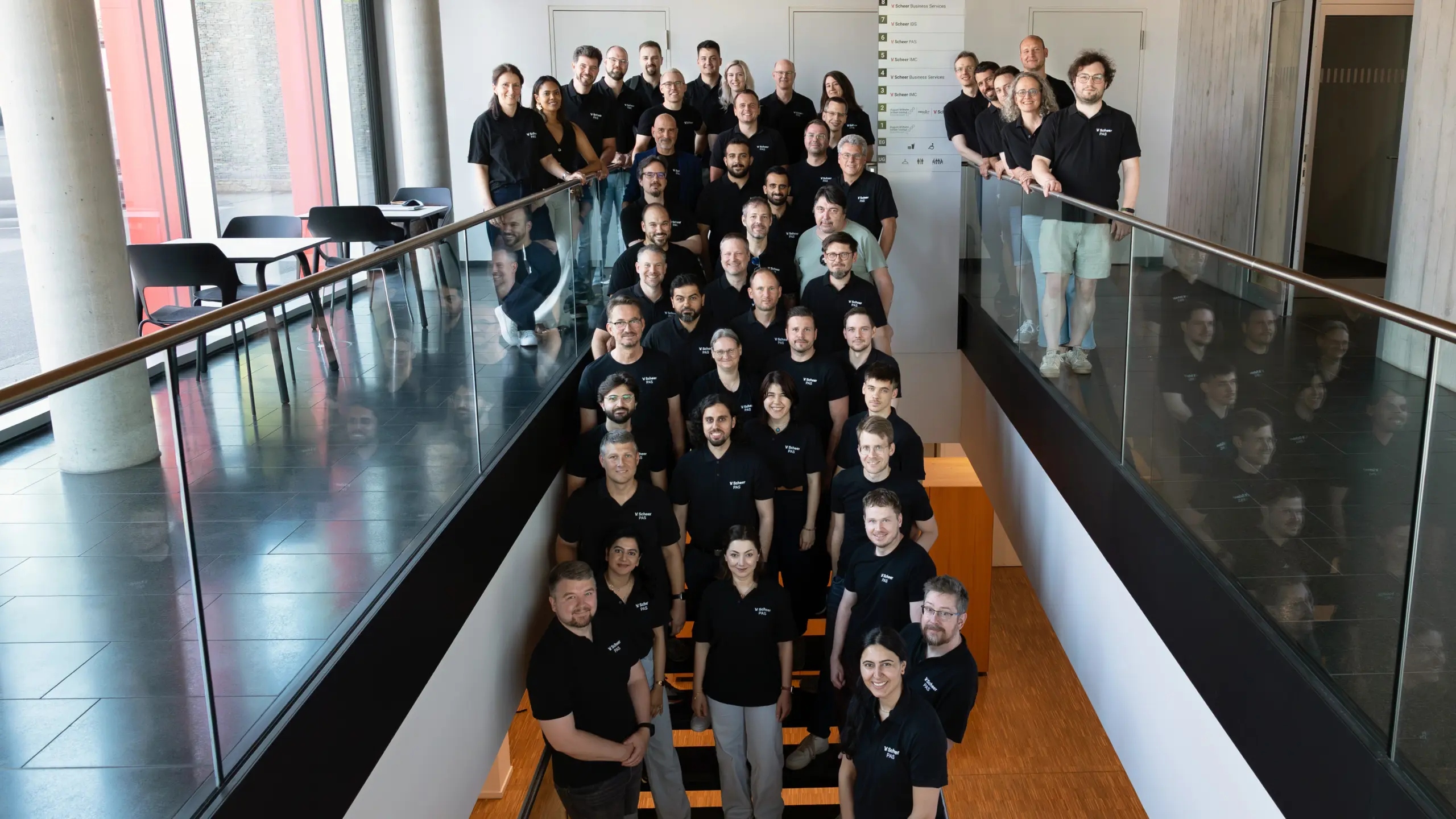
Innovation does not happen between two meetings
The coming months will determine how companies develop software, automate processes, and use AI productively in 2027. These changes cannot be understood on the side. They have to be tested in practice. That is why we brought together all Scheer PAS locations and formed interdisciplinary hybrid teams. Developers, product managers, consultants, and other specialists worked together on real-world challenges.
The most important insight of the day was clear:
Today, the bottleneck is no longer the technology. The bottleneck is the speed at which organisations learn to adopt new ways of working.
Hands-on instead of PowerPoint
At the centre of the hackathon was our new pro-code approach. The teams developed their solutions with PAS Code, supported by Claude Code and the Scheer PAS Framework. The applications created during the day are developed directly in our TypeScript monorepo and can then be run immediately within the Scheer PAS platform. This means that an idea can become a production-ready application within just a few hours, fully integrated into existing processes.
What used to take days or even weeks can now often be created in just a few hours. And that is exactly what we did not want to discuss only in theory. We wanted to experience it in practice.
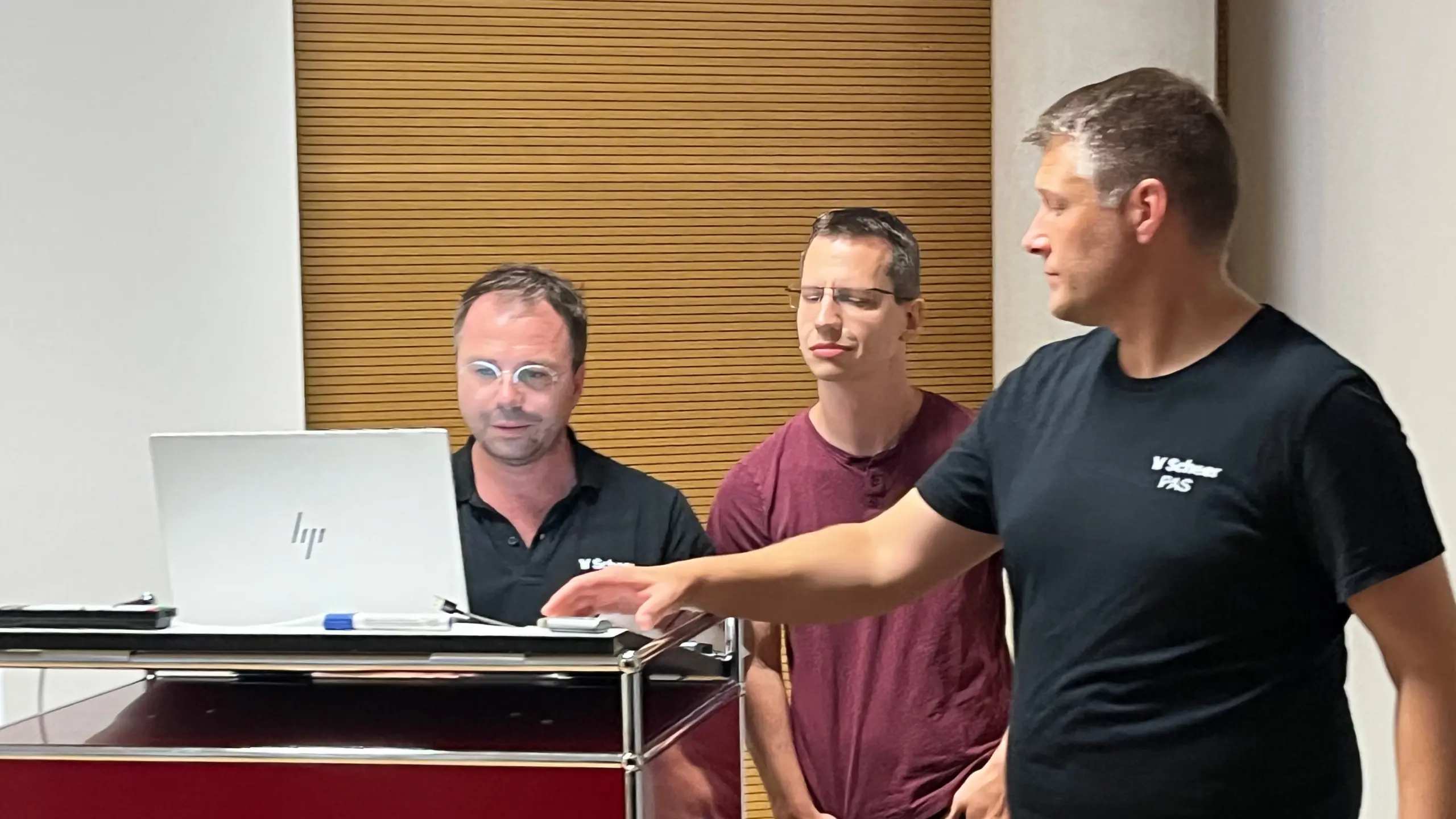
Four teams, four real challenges
Instead of building artificial demo projects, the teams worked on topics that will directly influence product development.
Among the prototypes and concepts created were:
- an OData connection library for simpler integration of enterprise systems
- a BPMN-oriented development approach in PAS Designer
- migration tools for existing applications, for example from MagicDraw
- a complete customer onboarding application as an example of modern enterprise app development
All of these results were created within a single hackathon day. Even more important, however, was the experience shared by everyone involved:
With AI-supported development, the focus shifts away from programming itself and towards architecture, process understanding, and domain expertise.
Agentic Process Orchestration requires new development methods
At Scheer PAS, we do not just talk about AI. Our positioning as a platform for Agentic Process Orchestration has a clear goal:
Companies should be able to orchestrate workflows, data, APIs, and AI agents on one shared platform in a way that is transparent, traceable, and fully under control.
To make that goal a reality, developer tools also need to keep up. That is why we are continuously advancing our Pro-Code approach.
With PAS Code, we combine modern AI coding assistants with the strengths of the Scheer PAS platform:
- professional TypeScript development
- direct integration into existing processes
- reusability within the central monorepo
- seamless integration into process automation and APIs
- enterprise governance and production-ready deployment
Our hackathon showed just how quickly new applications can be built this way, without compromising on quality or integration.
The real challenge Is organisational
The biggest insight from our hackathon was surprisingly clear. It is not the technology that determines the success of AI. It is the organisation. Many companies are currently discussing which AI models they want to use. That discussion does not go far enough.
The real question is this: How must development teams, business departments, and processes work together in the future if applications can be created not in months, but within just a few hours?
This organisational transformation is exactly what will determine which companies achieve real productivity gains by 2027. Companies that start experimenting with new ways of working today will be able to implement innovation much faster tomorrow.
Continuously improving, for our customers
For us, this hackathon was much more than an internal innovation day. It is part of our commitment to continuously improve, evaluate new technologies early, and feed our experience directly into our platform and our customer projects. Because our customers expect more than modern technology.
They expect guidance, practical experience, and solutions that work in production. That is exactly what we are working on.
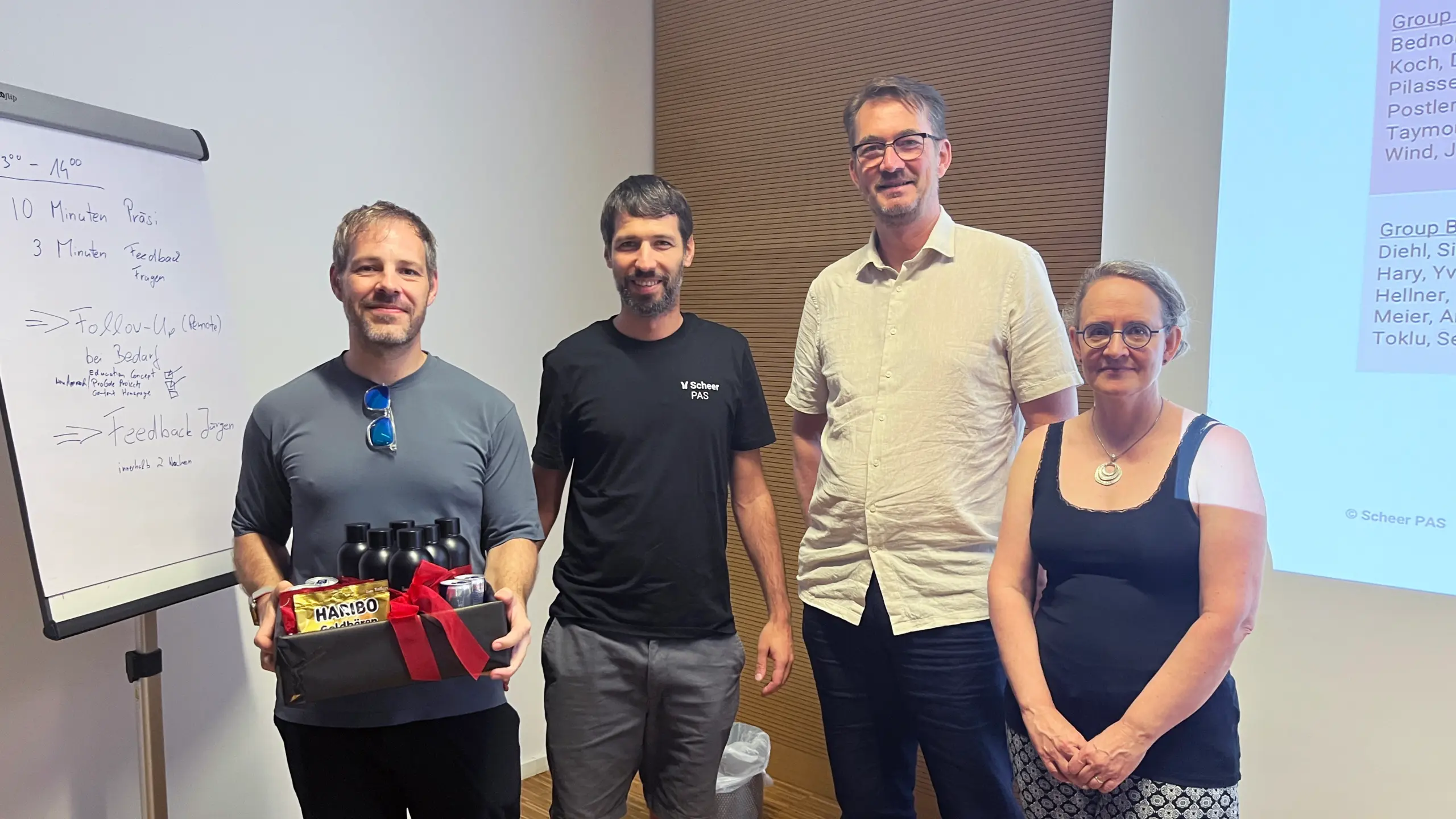
PAS code will soon be available as a trial
In the coming weeks, we will make PAS Code publicly available as a trial version. Even today, existing Scheer PAS customers can request an early look and evaluate the new pro-code approach together with us. If you would like to experience how modern AI-supported enterprise development works within the Scheer PAS platform, we would be happy to talk.
Feel free to contact us at: product@scheer-pas.com
Schedule a product demo or speak with us about the PAS Code trial version. Because the foundation for productivity in 2027 will not be laid in 2027. It is being laid right now.

