BLOG
KBA Interface Integration for Automotive Manufacturers: Keeping a Legacy SOAP Connection Stable
October 28 | Lukas Peter
The Kraftfahrt-Bundesamt (KBA), Germany’s Federal Motor Transport Authority, exchanges vehicle and approval data with manufacturers through a SOAP interface whose schema only the authority controls. For one automotive manufacturer, a central integration layer in Scheer PAS kept internal systems stable while the specification was incomplete, support from the authority was limited, passwords had to be renewed regularly, and the authority changed the interface on short notice.
TL;DR
The KBA dictates schema, documentation, credentials, and deadlines. Because all of that sat in one integration layer, a KBA interface revision with a two-month deadline only had to be implemented there, not in the manufacturer’s own systems.
Government interfaces rarely get much attention in integration projects. They are one connection among many, until they stop working. Then vehicle registration stops with them, and a deadline set by regulation does not move for anyone’s release plan. That makes them a good test of how an integration layer is built, and of what an AI agent would later need from it.
Why is the KBA interface hard to integrate?
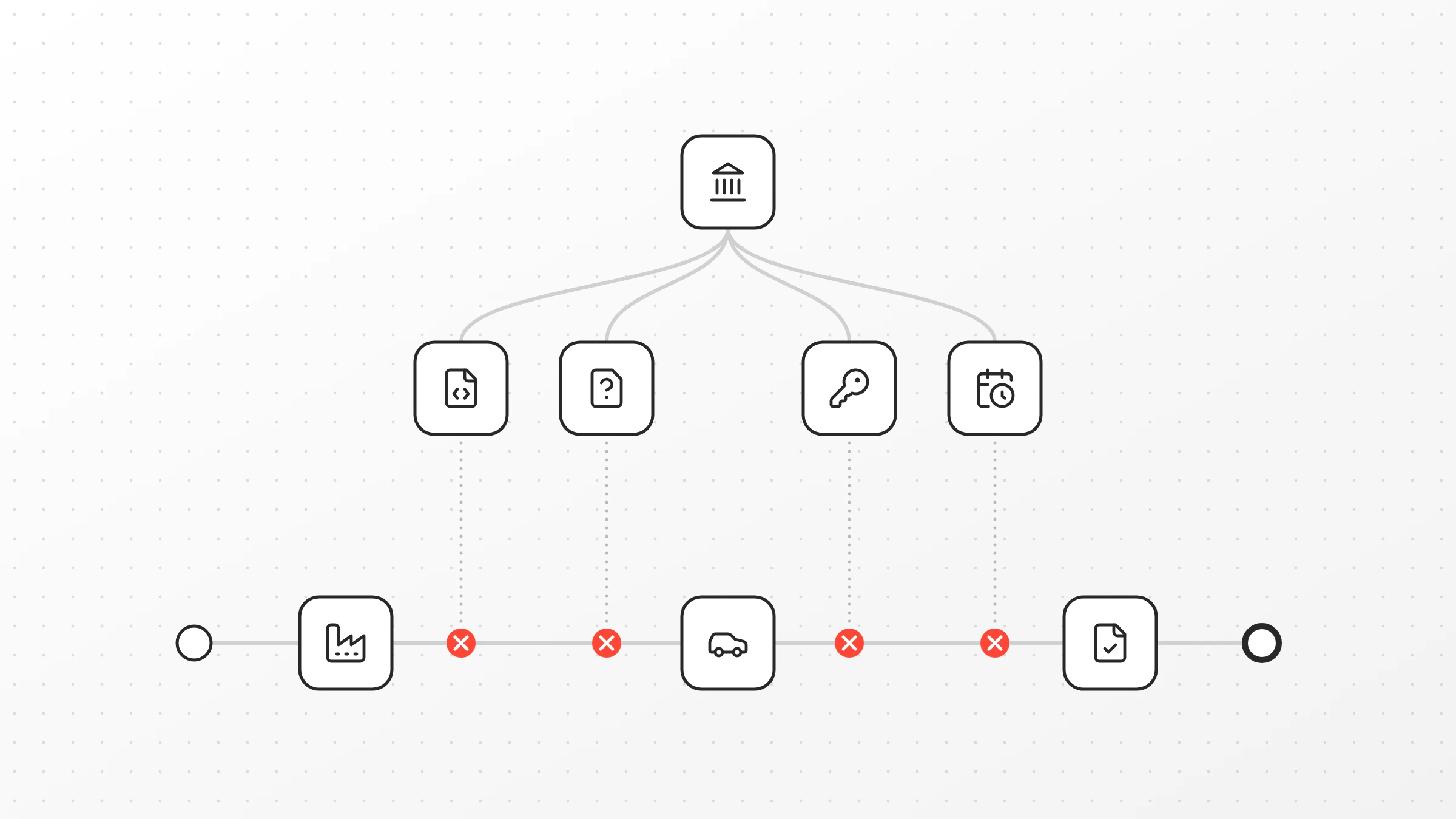
The KBA interface is hard to integrate because the manufacturer controls none of its parameters. The KBA sets the schema, writes the documentation, defines the credential cycle, and decides when the interface changes. Anyone of these can stop the process if the integration does not absorb it.
The schema is fixed. It has no extension points and no room for a field the manufacturer would find useful. Internal data must fit the authority’s structure, never the other way round.
The official specification was incomplete, and technical support from the authority was limited. Parts of the endpoint’s behavior only became clear by sending messages and reading the responses.
Access depends on passwords that must be renewed regularly. Miss a renewal, and the user is locked and communication with the KBA stops.
And when the authority revises the interface, regulation sets the deadline, not the manufacturer’s release calendar. In this project, the KBA announced extensive changes and left two months to implement them.
If the connection breaks, production, vehicle registration, and compliance reporting stall with it.
How does an integration layer protect internal systems from KBA interface changes?
An integration layer protects internal systems by owning everything that is KBA-specific. The manufacturer keeps delivering data in its own format. Configurable mappings and rule sets in Scheer PAS transform it into the structure the KBA requires, and the connection itself sits there too. When the KBA changes its interface, the change happens there, and ERP and internal master data systems stay as they are.
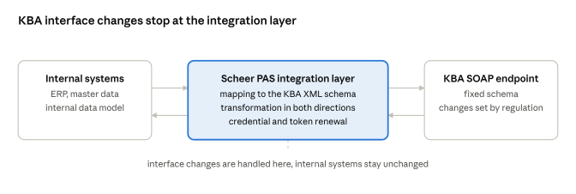
That concentration is what made a short delivery window manageable. Instead of coordinating changes across several backend systems and their release cycles, the team adjusted mappings and service models in Scheer PAS. All changes were implemented within the deadline, and the manufacturer did not have to adapt any of its own systems.
Complex response messages from the KBA are mapped back as well, into a format the manufacturer’s processes understand. Internal systems never handle the authority’s XML directly.
The trade-off is that the integration layer becomes software, to be owned, versioned, and tested. For an interface that changes on someone else’s schedule, that is still the cheaper option.
How do you stop expiring credentials from blocking vehicle registration?
Expiring KBA passwords stop being a risk once the integration layer tracks and renews them, instead of a calendar entry. In this project, an automated process in Scheer PAS continuously checks whether the credentials are still valid and renews passwords before they expire. User accounts are not locked, and business processes do not stop.
It sounds like a detail. In practice, an expired credential is one of the few failures that can stop a correctly mapped, fully tested interface overnight.
How do you integrate an interface with incomplete documentation?
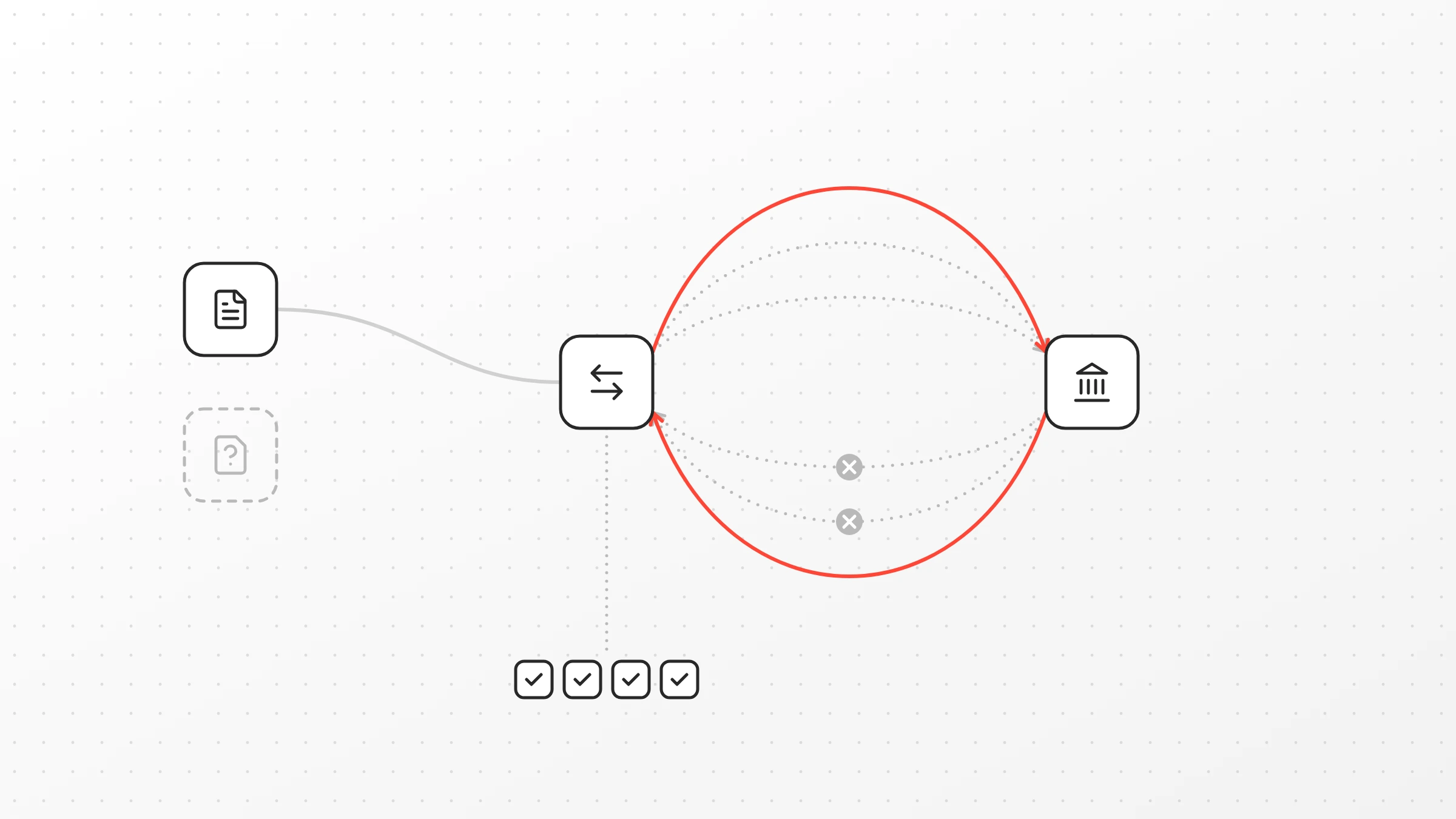
An interface with incomplete documentation has to be integrated against its observed behaviors, not just the spec. With key information missing, the project team analysed how the KBA endpoint actually behaved, adjusted the mappings to what it accepted and returned, and developed the integration iteratively through tests and validation until it ran reliably in production.
This approach is slower at the start and faster overall. Every behavior found this way ends up in the mapping, where the next interface revision can be checked against it.
KBA constraints at a glance
Constraint at the KBA | Risk without an integration layer | How the integration layer handles it |
|---|---|---|
Fixed SOAP schema | Internal data does not fit | Mapping to the KBA XML schema |
Incomplete specification, limited support | Messages rejected or misread in production | Iterative tests against the real endpoint; whatever turned up went into the mapping |
Passwords that must be renewed regularly | Locked user, communication with the KBA stops | Automated monitoring and renewal |
Interface revisions on a regulatory deadline | Changes spread across several backend systems and their release cycles | Mappings and service models only, ERP untouched |
Why can’t an AI agent submit data to the KBA directly?
An AI agent should not submit data to the KBA directly, because the KBA records every submission, and correcting a wrong one is an administrative process, not a rollback. A language model can produce XML that looks valid and still uses a code the authority does not accept or leaves out a field the endpoint expects.
The layer that made this integration reliable is the same one an agent would need underneath. The agent can decide that a record has to be filed, gather the data, and prepare the request. Scheer PAS then maps it, checks it against the schema, uses credentials the agent never sees, and sends it.
The agent never touches the SOAP envelope, the endpoint address, or the credentials. It calls an operation with a defined input and output. How Scheer PAS defines which operations an agent may execute is described in this article.
No AI agents were used in this project. The integration layer described here is the precondition for using them later.
What guardrails do agent-prepared KBA submissions need?
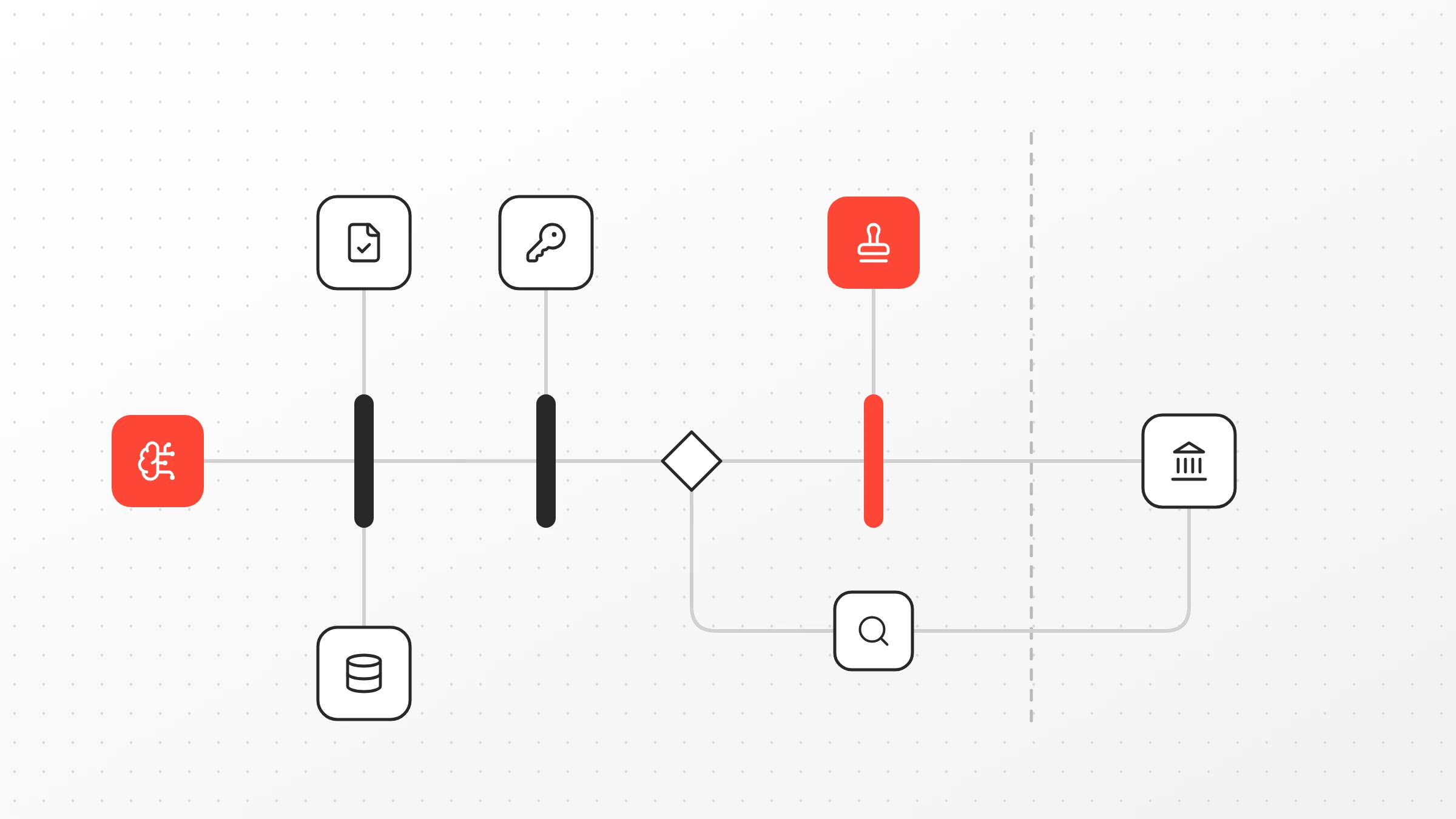
Agent-prepared KBA submissions need checks that run before the message leaves the company. Once a submission reaches the KBA, it is on record. Three of them are specific to this interface.
Schema enforcement against the current KBA schema version, plus plausibility checks against internal master data. A submission that fails here never reaches the authority.
Credential isolation. The agent requests an operation; the integration layer holds and renews the credentials. The agent never sees or stores them.
Approval before submission for anything that changes an official record. Queries can run automatically. Submissions wait for a person.
The general requirements for agent governance, from validation and permissions to logging and human approval, are covered in this article.
Lessons learned
Treat the KBA interface as something that will change without asking you. Everything specific to it belongs in one place, and that place is not the ERP system.
Automate credential renewal before you need it. It is the cheapest fix in the whole project and the one most likely to be forgotten.
Expect gaps in the documentation, do not count on support from the authority, and plan time for testing against the real endpoint.
And if AI agents are on the roadmap, they will need exactly this layer underneath. Build it for the interface first.
Government interfaces are usually treated as a box to tick. Projects like this one show that they are where an integration layer earns its keep, and where an AI agent would fail first if it had nothing in between.
Frequently asked questions
What do manufacturers use the KBA interface for?
To exchange vehicle and approval data with the Kraftfahrt-Bundesamt, which keeps Germany’s central vehicle register and acts as the national type-approval authority. When the connection fails, registration-related processes and compliance reporting stall.
Do KBA interface changes require changes to the ERP system?
Not when the mapping between internal data and the KBA schema sits in an integration layer. Interface revisions are then handled in that layer, and ERP and internal master data systems can stay unchanged.
Who should be responsible for renewing KBA credentials?
The integration platform that uses them. It can track validity, renew in time, and raise an alert when a renewal fails, which a calendar reminder cannot do reliably.
About the author
Lukas Peter is a developer and technical consultant at Scheer PAS. He builds integration services in Scheer PAS Designer and PAS Code, including xUML and BPMN service models, REST and file-based adapters, and connections to SAP data sources. Link to author’s LinkedIn Profile – https://www.linkedin.com/in/lukas-peter-9998b1250/

