BLOG
The Missing Link in Enterprise Complexity
August 12 | Sebastian Dietrich
Transforming a business idea into reality is already difficult. Scaling that business in 2026, however, often feels close to impossible. With every improvement, acquisition, or new initiative, complexity increases, and new bottlenecks emerge as quickly as old ones are resolved. For decades, enterprises have turned to software platforms to address these challenges, particularly in system integration and process automation.
Well-known platforms for integration and automation have undoubtedly reduced operating costs and improved efficiency. Yet in today’s environment, where AI-driven scaling promises dominate executive conversations, many organizations experience diminishing returns. The pressure on CEOs and CIOs to “not miss out” on faster scaling or cost reduction often leads to reactive technology decisions. Instead of reducing complexity, these decisions frequently create digital debt that becomes increasingly difficult to manage, especially in volatile markets.
Most enterprises encounter a familiar set of challenges:
- Business growth that is not accompanied by a fundamental rethink of business processes
- Continuous increases in IT landscape complexity caused by stacked, overlapping solutions
- Poorly managed or fragmented system connectivity
- Business processes riddled with bottlenecks and redundancies
- Limited ability to scale further due to accumulated structural and technical complexity
Addressing these issues requires shifting focus away from tools alone and back to the core of how the business operates. Rebuilding business processes first, and supporting them with modern integration and automation platforms, creates a far more resilient foundation for sustainable growth.
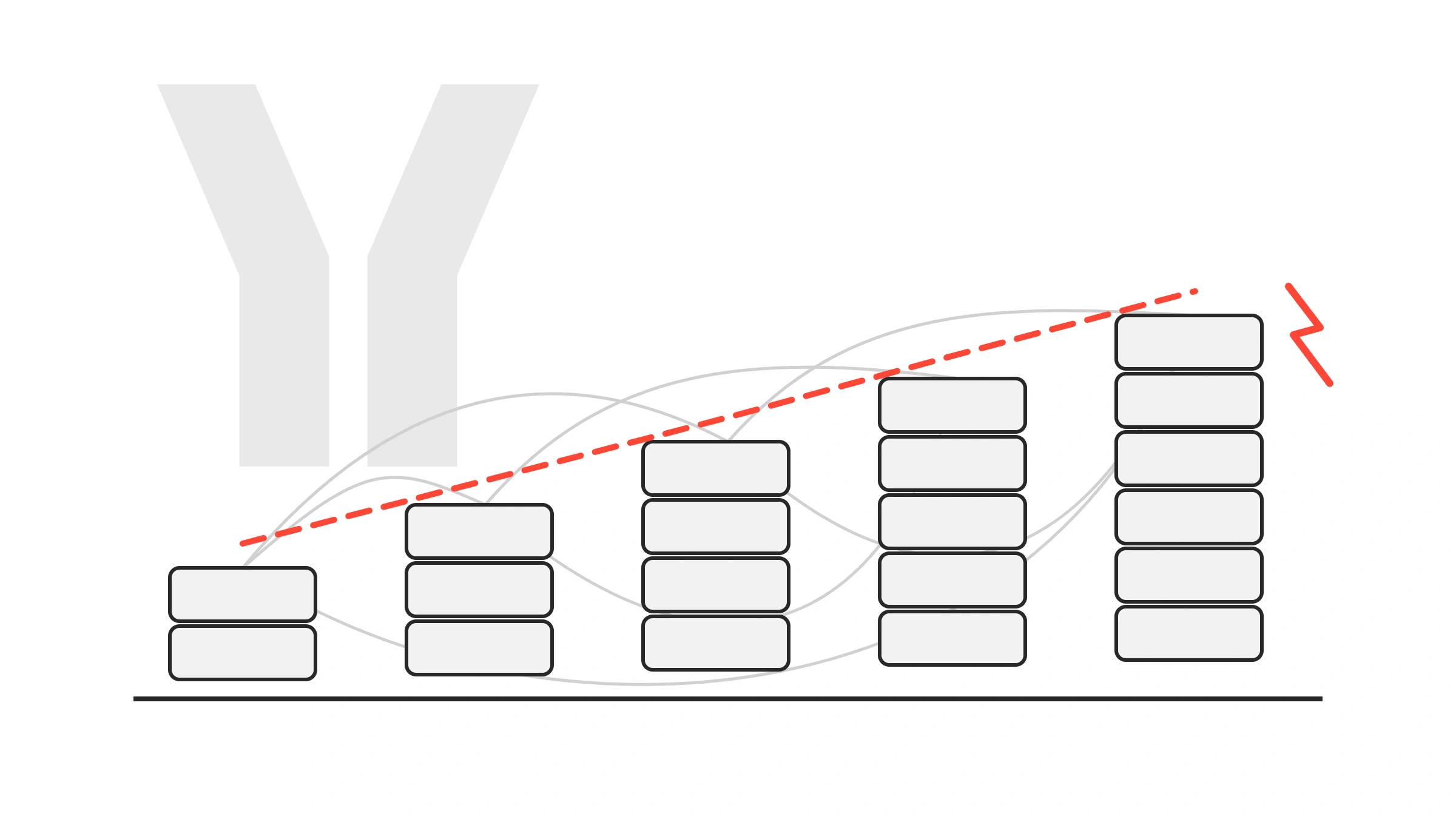
Scaling the business also scales risk
As enterprises grow, their business processes inevitably expand in scope and complexity. Additional stakeholders, external partners, regulatory requirements, and customer expectations all increase process interdependencies. Each phase of growth introduces new systems or expands existing ones, tightening the coupling between applications and data flows.
Over time, the IT landscape becomes harder to maintain and even harder to modernise. After years of layering new solutions onto legacy architectures, gaining real-time insight into operational performance becomes increasingly difficult. Numerous organisations, including market leaders, have learned that continuously upgrading monolithic systems does not prevent failure. The real challenge lies in managing increasingly complex business processes that span outdated, modern, and cloud-native systems alike.
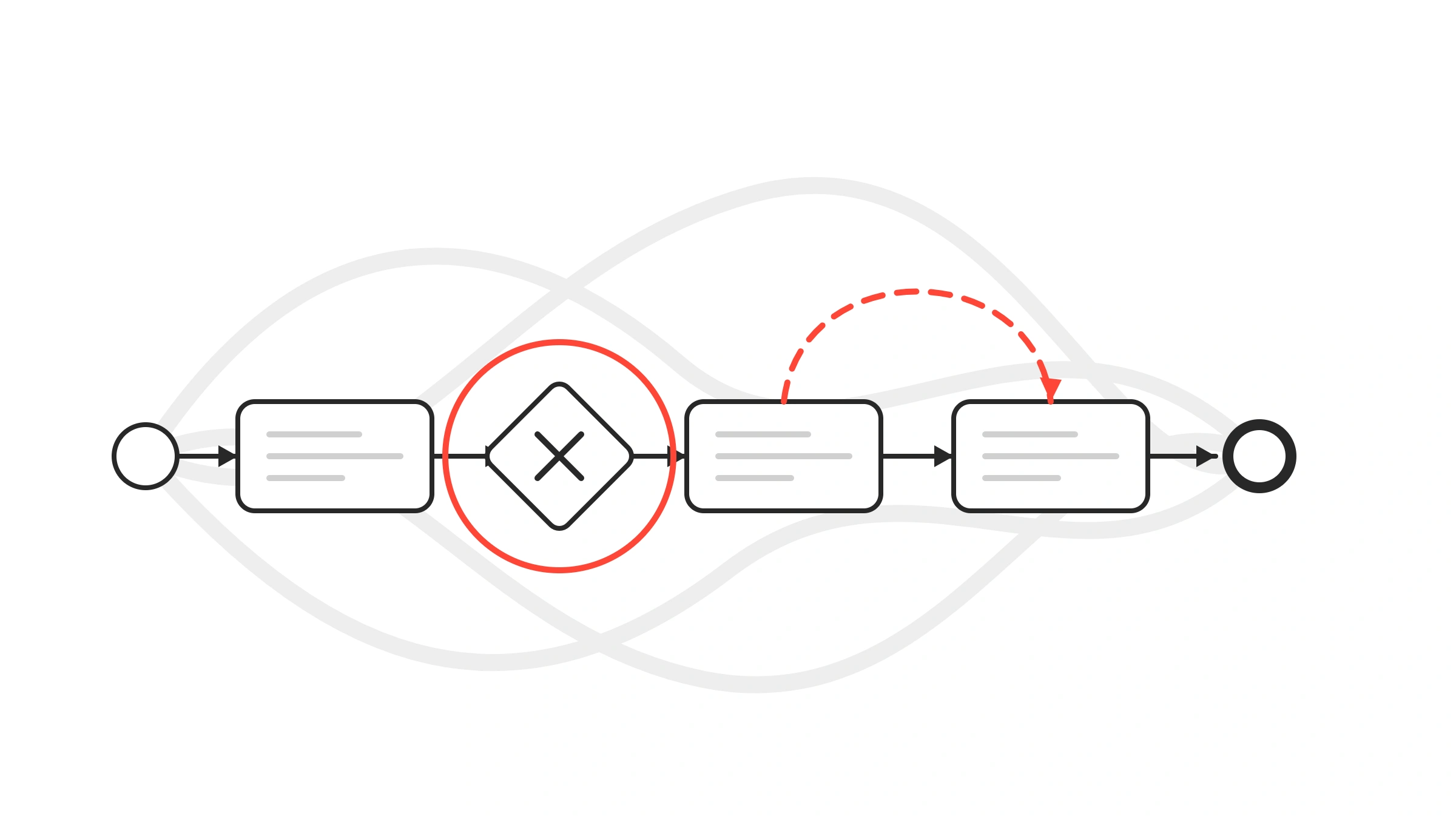
Reviewing processes before replacing systems
A meaningful first step toward reducing complexity is reviewing existing business processes. Simply documenting or modelling processes using BPMN tools can reveal how work actually flows through the organisation and where friction occurs.
Instead of addressing root causes at the process level, many organisations focus on symptoms such as:
- Missing technologies to modernise the IT landscape
- Difficulties migrating legacy systems to newer platforms
- Limited time or resources to address complexity without disrupting operations
Process modelling alone often exposes inefficiencies, redundancies, and unnecessary handovers. Yet in fast-moving enterprises, taking time for introspection is often perceived as a luxury. In reality, even a brief step back can prevent years of accumulating technical and organisational debt.
Tackling enterprise complexity with integration and automation
Most enterprise IT landscapes today consist of hybrid cloud environments combined with deeply embedded legacy systems. Attempting to replace these systems entirely introduces significant risk and cost. A more pragmatic approach is to integrate and automate around them.
System integration, both vertical and horizontal, enables consistent data flows across decades-old systems and modern AI-powered platforms. Maintaining data integrity and process state across multiple systems is no longer theoretical. When done correctly, integration allows organisations to modernise outputs and capabilities without destabilising core operations.
However, integration should never be pursued for its own sake. Even fully connected IT landscapes can fail to deliver business value. Many large integration initiatives struggle because they improve technical connectivity without improving business outcomes. Dashboards may fill with data, yet executives still lack clarity on process efficiency, operational risk, or scalability.
Integration’s real value emerges only when it is driven by business processes
By modelling processes using standardised BPMN approaches, using those processes as the foundation for system integration, and extending them with technologies such as API management and agentic AI, organisations can reduce complexity rather than amplify it. The result is an IT landscape that supports growth instead of constraining it.

When complexity becomes the core problem
Modern enterprises rarely operate in clean, isolated environments. Hybrid cloud architectures, legacy core systems, regulatory obligations, real-time data demands, and human decision points are now standard. The end result is a challenge which is no longer purely technical, but also structural.
Many organisations attempt to manage complexity by adding specialised tools. One solution manages APIs, another workflows, another data transformation. While each may be effective individually, overall complexity continues to rise because business processes remain fragmented across systems.
At scale, connectivity rarely fails. But coherence does
As business processes stretch across departments and partners, they become long-running and stateful. They pause for approvals, depend on external events, and unfold over days or months. Losing process state or data consistency in such environments does not result in minor inefficiencies. It leads to broken processes, compliance risks, manual recovery work, and reliance on undocumented knowledge within IT teams.
Process-centric integration as a stability mechanism
A process-driven integration approach starts from a simple premise: business processes have memory. They depend on previous decisions and must survive system failures without losing context.
Treating processes as stateful entities rather than transient message flows significantly improves operational stability. Long-running processes can withstand restarts, partial outages, and infrastructure changes without manual intervention. For regulated industries, this also ensures auditability and traceability.
Architecturally, integration becomes a backbone rather than a peripheral layer. Business logic, state, and transactional consistency are embedded directly into process execution. Data integrity is maintained by design, not by retries or workarounds.
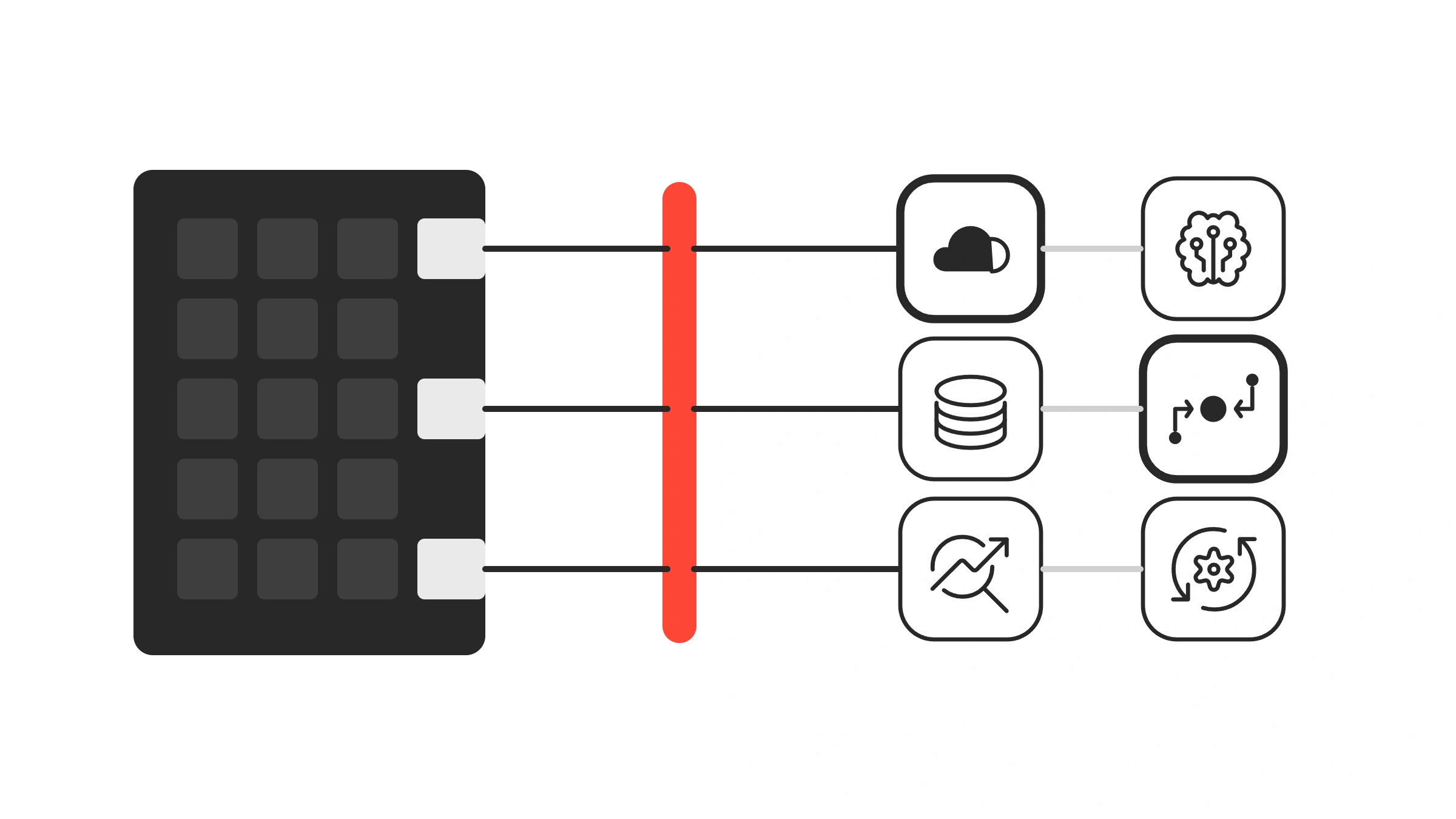
Scaling without replacing legacy systems
A common misconception in digital transformation initiatives is that legacy systems must be replaced to enable future growth. In practice, replacement projects are costly, risky, and often fail to deliver expected benefits.
Integrating existing systems into modern, automated processes offers a more resilient path forward. When legacy applications can reliably exchange data with cloud-native services, analytics platforms, and AI-driven components, they remain valuable contributors rather than obstacles.
This approach enables incremental modernisation. New capabilities can be introduced without disrupting core systems, and future technologies can be adopted without rewriting established foundations.
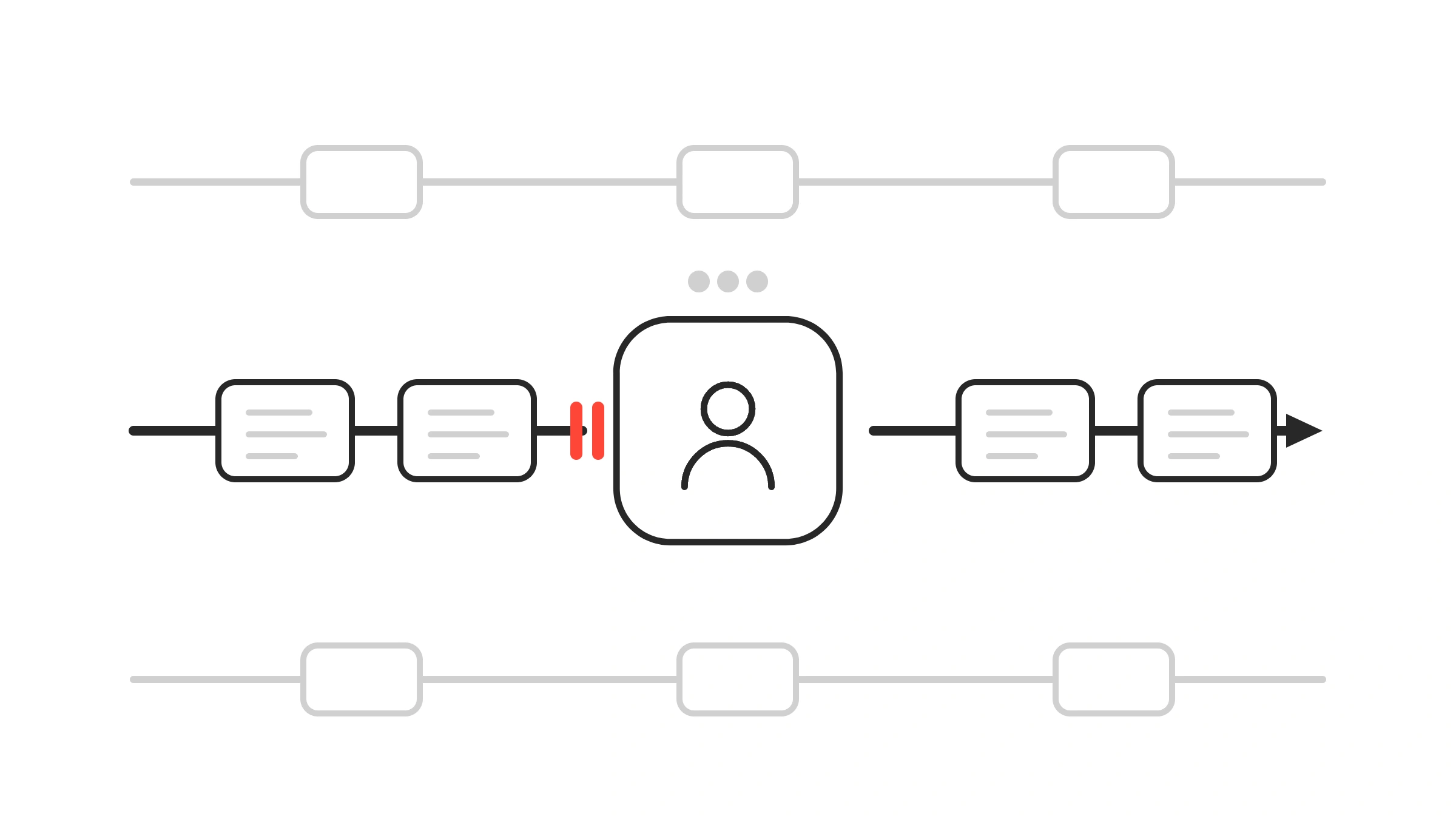
Human decision-making remains essential
Despite advances in automation and AI, many critical business decisions still require human judgment. Approval steps, exception handling, and contextual assessments remain integral to enterprise processes.
The challenge is not automation versus humans, but integrating human decision points without breaking process continuity. When workflows pause for human input, the process must retain full context and resume reliably, regardless of how long decisions take. Email threads and spreadsheets cannot provide this level of reliability or traceability.
Embedding human interaction directly into automated processes ensures accountability, continuity, and compliance. In complex environments, this is a requirement for operational resilience, not a usability enhancement.
Turning integration into measurable business outcomes
Many integration initiatives struggle to demonstrate value beyond technical modernisation. Systems are connected, architectures improved, yet business performance remains unchanged. The difference lies in focusing on processes rather than endpoints.
When integration is driven by end-to-end business processes, value becomes visible. Bottlenecks can be measured, redundancies removed, and performance evaluated across complete workflows. This directly links IT architecture decisions to outcomes such as efficiency, scalability, and risk reduction.
For CIOs and CTOs, this perspective enables more informed technology investments and clearer alignment between IT strategy and business objectives.
As digital transformation continues, enterprise complexity will not diminish. Distributed architectures, regulatory requirements, partner ecosystems, and AI-driven services will add layers rather than replace existing ones.
In this environment, the ability to execute complete business processes reliably across diverse systems becomes a strategic capability. Platforms that support persistent process state, transactional consistency, and integrated human workflows provide a foundation that absorbs change instead of amplifying it.
The critical question for enterprise leaders is no longer whether systems can be connected, but whether business processes can run end to end without losing control as complexity grows.
Organisations that address this challenge at the process level will scale more safely and remain adaptable in the face of continuous technological change. If your organisation needs help with complex business processes and divers IT systems, let’s talk!

