BLOG
The Four Approaches to Process Automation (and When to Use Each One)
September 16 | Sharam Dadashnia
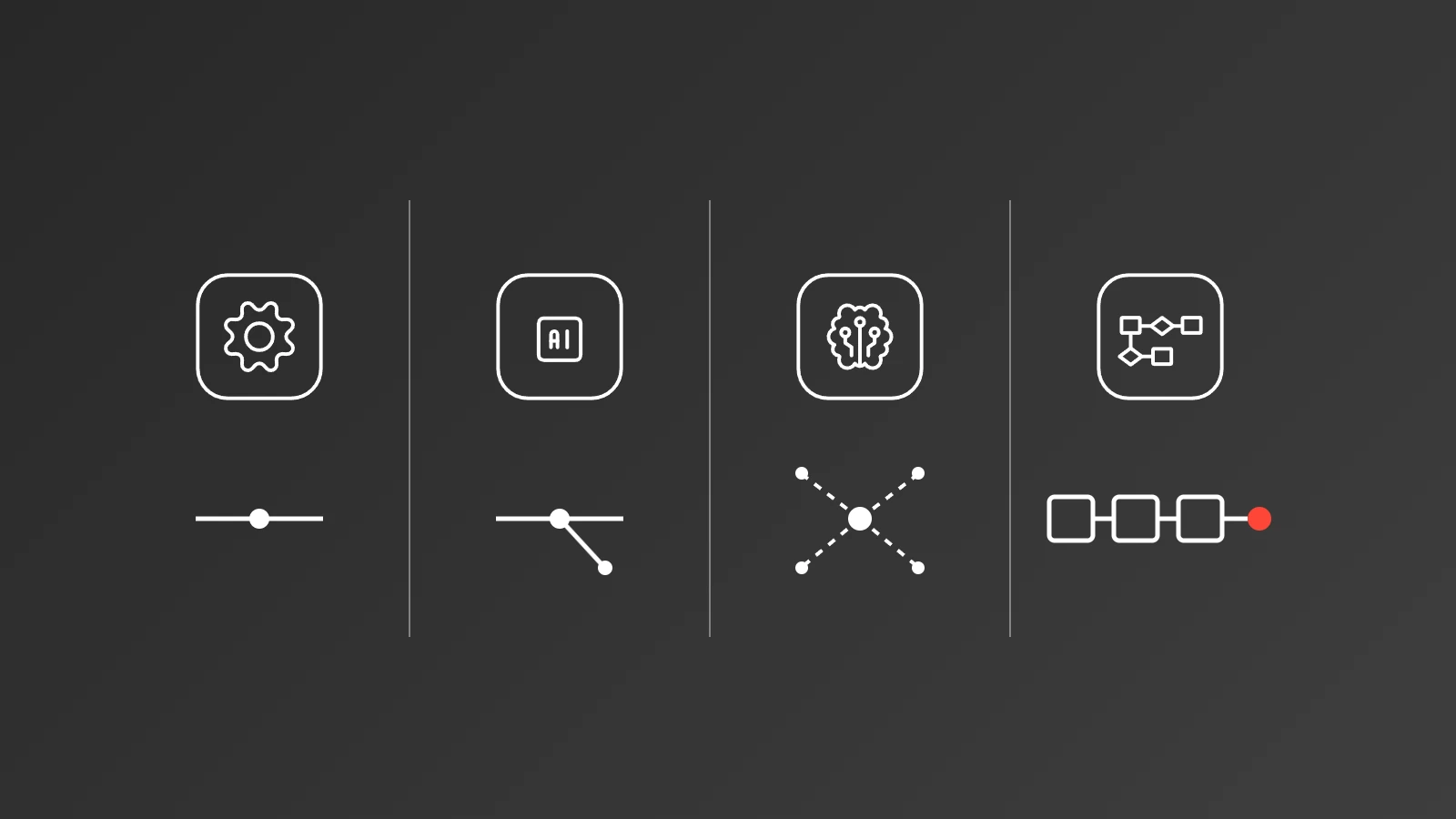
Not all automation is created equal. Nevertheless, in many discussions, four very different approaches are grouped under the same term: a rule-based workflow, a single AI agent, an agent acting as an orchestrator, and a business process in which a process engine specifically controls agents.
This leads to poor decisions. One team expects an AI agent to provide the traceability of a BPMN process. Another spends months building a process architecture, even though a single fixed rule would have sufficed. Yet another automates individual tasks, even though the bottleneck lies between departments, systems, and wait times.
The right question, therefore, is not: Where can we use AI? But rather: What kind of decision needs to be made at which point in a process—and what form of automation is appropriate for that?
The current state of affairs confirms this distinction. The BPM Pulse Survey 2026 by BearingPoint describes AI in process management as a relevant topic, while the productive use of agent-based systems simultaneously raises questions about control, transparency, and accountability. Agents expand process automation. They do not automatically make it better.
Below, four approaches are presented side by side—along with their appropriate areas of application and their limitations.
Approach 1: Rule-based automation
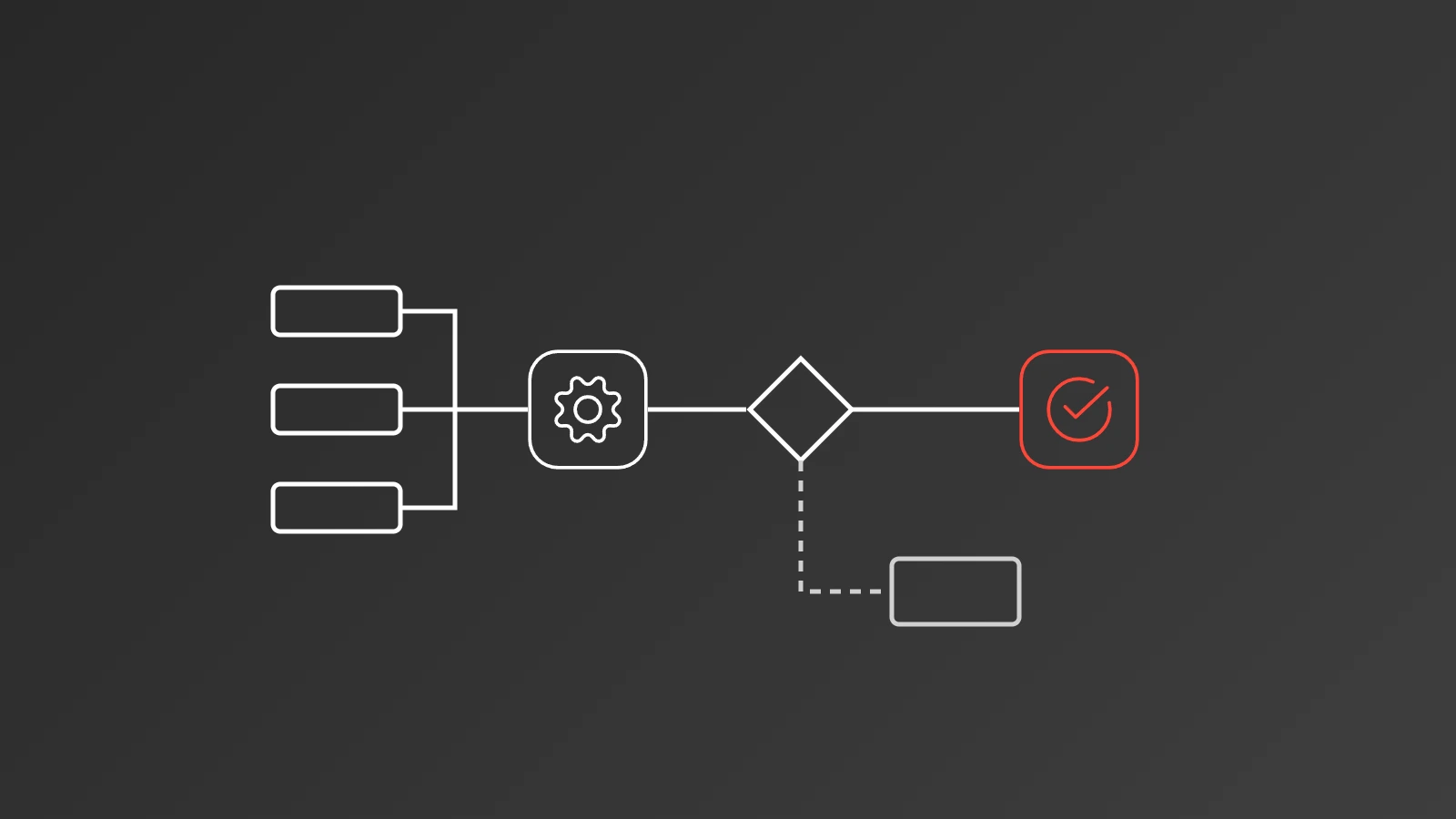
Rule-based automation is the right approach when the workflow is known, the inputs are structured, and the decision is unambiguous.
An example: An invoice is approved if the order number, amount, and cost center match the stored data. A purchase order is forwarded if it exceeds a specified value. A data record is created as soon as all required fields are filled in.
No agent is needed here. There are no open-ended questions to interpret. The rule can be reviewed, tested, and modified as needed.
This is not a step backward compared to AI. On the contrary: deterministic steps are often faster, more cost-effective, and easier to trace. They should remain where they fit.
Rule-based automation works particularly well when:
- Decisions are based on clear criteria.
- The data is available in fixed structures.
- The process rarely involves exceptions.
- Speed, cost control, and reproducibility are important.
- A process step must still be explained exactly the same way even years later.
Its limitations lie in unstructured information and cases that require judgment. An email from a customer, a technical document, a complaint with conflicting details, or a natural-language inquiry cannot be reliably handled with a rigid set of if-then rules.
This is where AI agents come into their own.
Approach 2: A single AI agent for a specific task
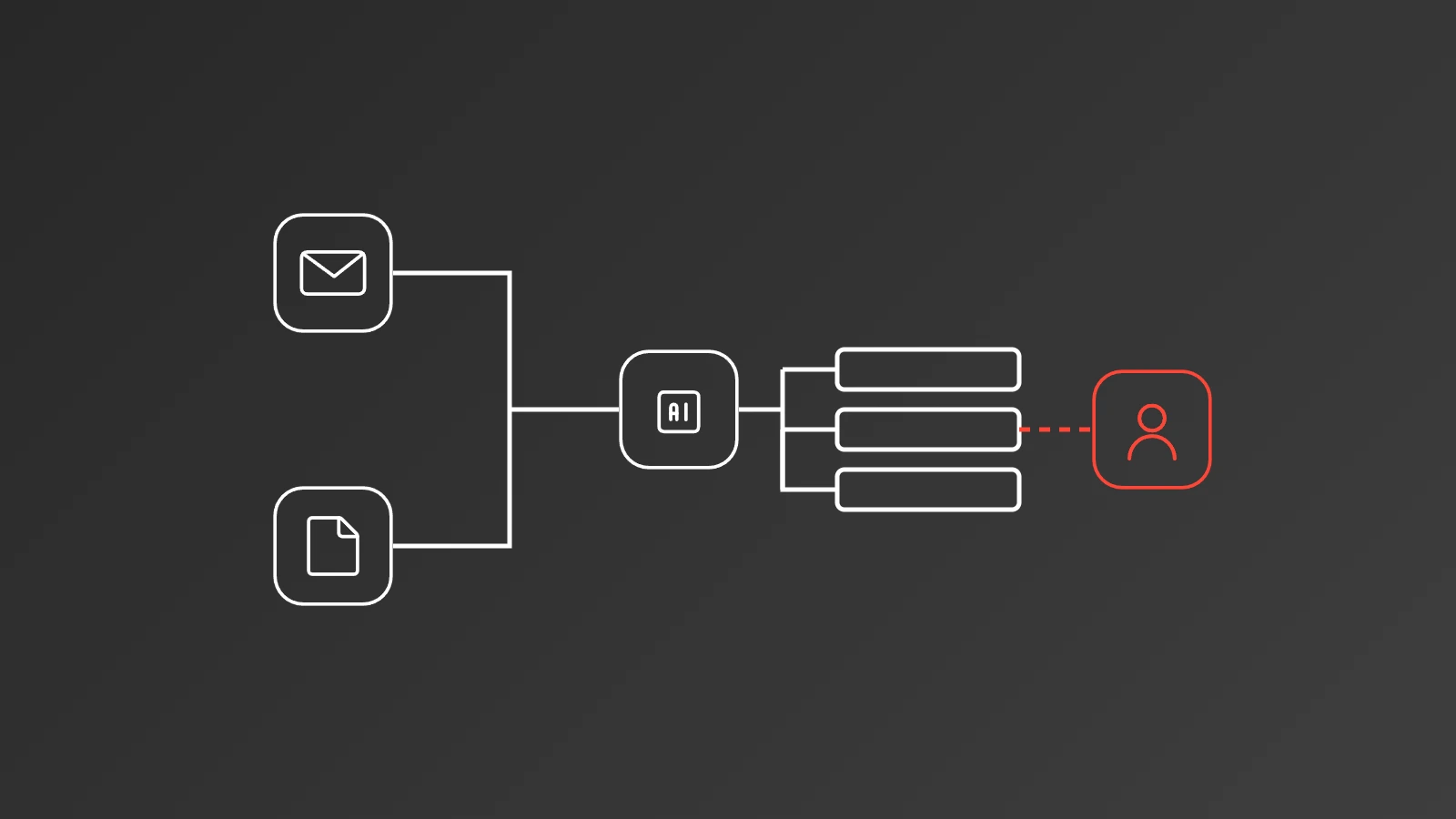
A single AI agent handles a task that requires language, documents, context, or a reasoned assessment.
For example, it can:
- categorise and prioritise incoming emails,
- extract information from documents,
- flag anomalies in data,
- draft responses,
- prepare cases for a case handler,
- and consolidate knowledge from multiple sources.
The key difference from rule-based automation: The agent does not merely process a fixed condition. It evaluates information within a specified framework. To do this, it uses a language model, context, tools, and clearly defined inputs and outputs.
This can significantly reduce the amount of manual preparatory work, particularly in document and communication processes. Fraunhofer IAIS cites intelligent process automation—including for document processes as well as applications in sales, purchasing, and HR—as an area of application for AI. It is crucial that the AI does not operate in isolation but is integrated into business processes in a controlled manner. See Fraunhofer IAIS: Intelligent Process Automation.
A single agent makes sense when:
- a task is clearly defined,
- unstructured data needs to be processed,
- the decision may initially provide a suggestion,
- a human can provide final approval,
- the process does not have a long, cross-system runtime.
The limitation: A helpful agent does not yet constitute a controllable end-to-end process.
If an agent summarises an email, that is a single task. However, if that email initiates a customer inquiry, triggers a technical review, requires data from multiple systems, awaits approval, generates a quote, and triggers a follow-up after ten days, a single agent is no longer sufficient.
The agent can handle individual steps. It should not be the sole determinant of what happens to the entire process.
Approach 3: An orchestrator agent for multi-step tasks
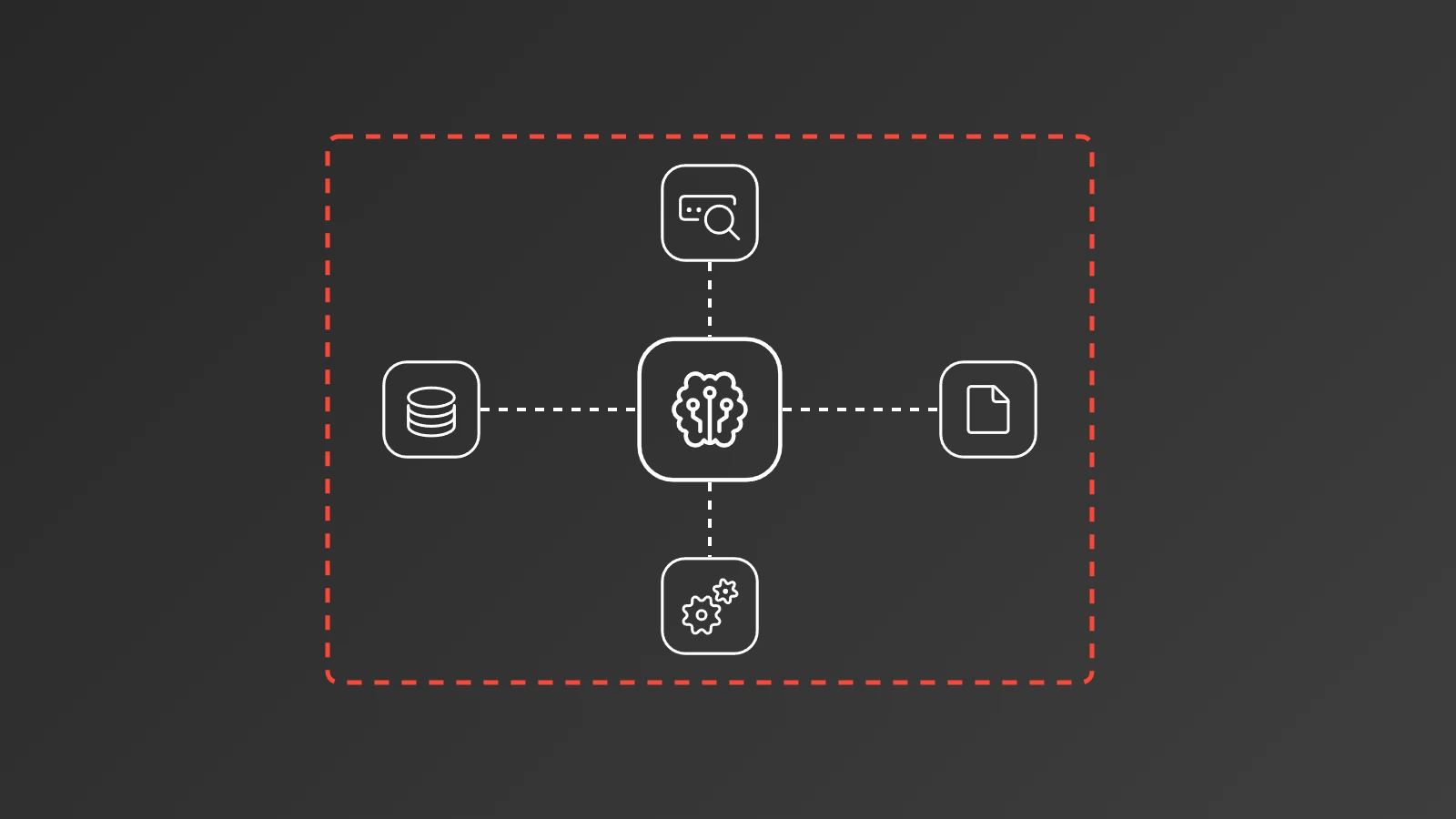
An orchestrator agent plans and coordinates multiple steps. For example, it decides which tools to use, what information is missing, and in what order subtasks should be executed.
This sounds like a natural next step: Instead of building five specialised automations, you give an agent a goal and the necessary tools. The agent checks data, accesses systems, evaluates results, and takes the next step.
This can work for limited, knowledge-intensive tasks. For instance, during research, a preliminary review, a case analysis, or the preparation of a decision memo. Platform providers now also describe workflows in which agents are used alongside traditional workflows. Microsoft explicitly distinguishes between agents and workflows: Agents are designed for more variable, context-dependent work, while workflows execute a predetermined sequence of steps. See Microsoft Learn: Agent workflows.
The strength of an Orchestrator agent lies in situations where the path to the result isn’t the same every time.
Example: A request for a complex replacement part comes in. The agent reads the request, reviews the available information, searches for relevant product data, identifies open issues, and creates a follow-up query or a structured template for the sales team.
This is significantly more than a single prompt. Nevertheless, the question remains: Who manages the process if it takes weeks rather than minutes to complete?
An Orchestrator agent reaches its limits when:
- multiple departments are involved,
- a process is on hold for an extended period,
- deadlines, escalations, and follow-ups become necessary,
- decisions must be formally approved,
- the process model changes during ongoing processes,
- auditability is required for each process step,
- and multiple agents and systems need to interact in a traceable manner.
Then an intelligent task becomes a business process. And business processes require more than just planning based on a model.
Approach 4: Agents orchestrated by a process engine
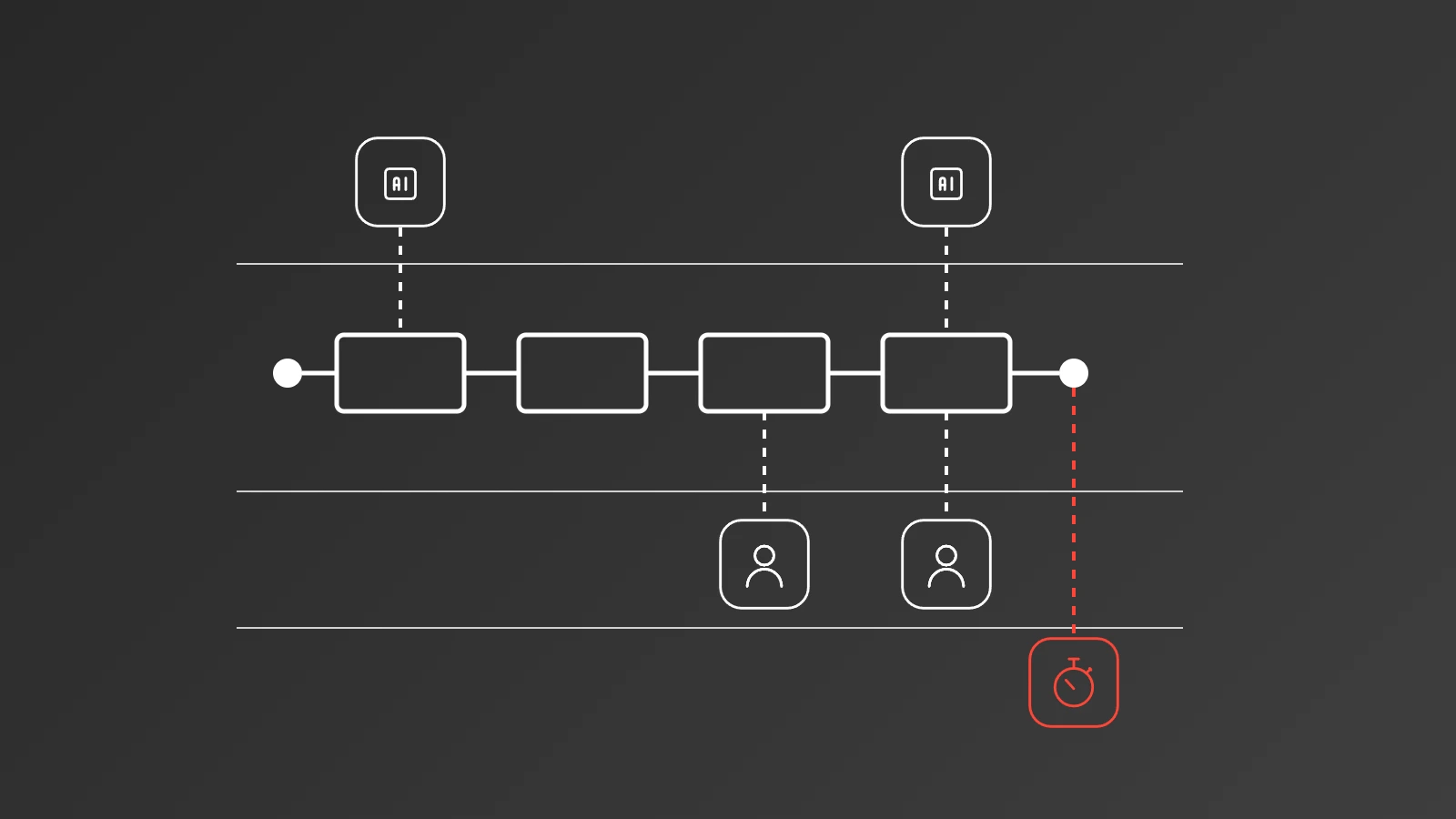
In the fourth approach, the process remains the guiding structure. A process engine controls the workflow: sequence, responsibilities, deadlines, waiting states, escalations, human approvals, and system integration. AI agents are deployed where judgment, language, or the processing of unstructured information is required.
That is the crucial difference.
No single agent attempts to keep the entire workflow in mind. The process maintains the state. No single language model decides on its own which action is permissible. The process model and permissions define the framework. There’s no need to painstakingly piece together logs later. The workflow provides a traceable history.
A quotation process illustrates why this is important:
- A request is received.
- An agent extracts requirements from the email and attachments.
- The process engine creates the task and verifies required data.
- A department assesses technical feasibility.
- An agent prepares a draft quotation based on approved data.
- A human approves the quotation.
- The process awaits the customer’s response.
- After a defined deadline, a follow-up or escalation is triggered.
The agent is no less valuable here. They are simply deployed where they can best leverage their strengths. The system reads, evaluates, structures, or formulates. The process engine ensures that the process remains controllable across system boundaries, wait times, and responsibilities.
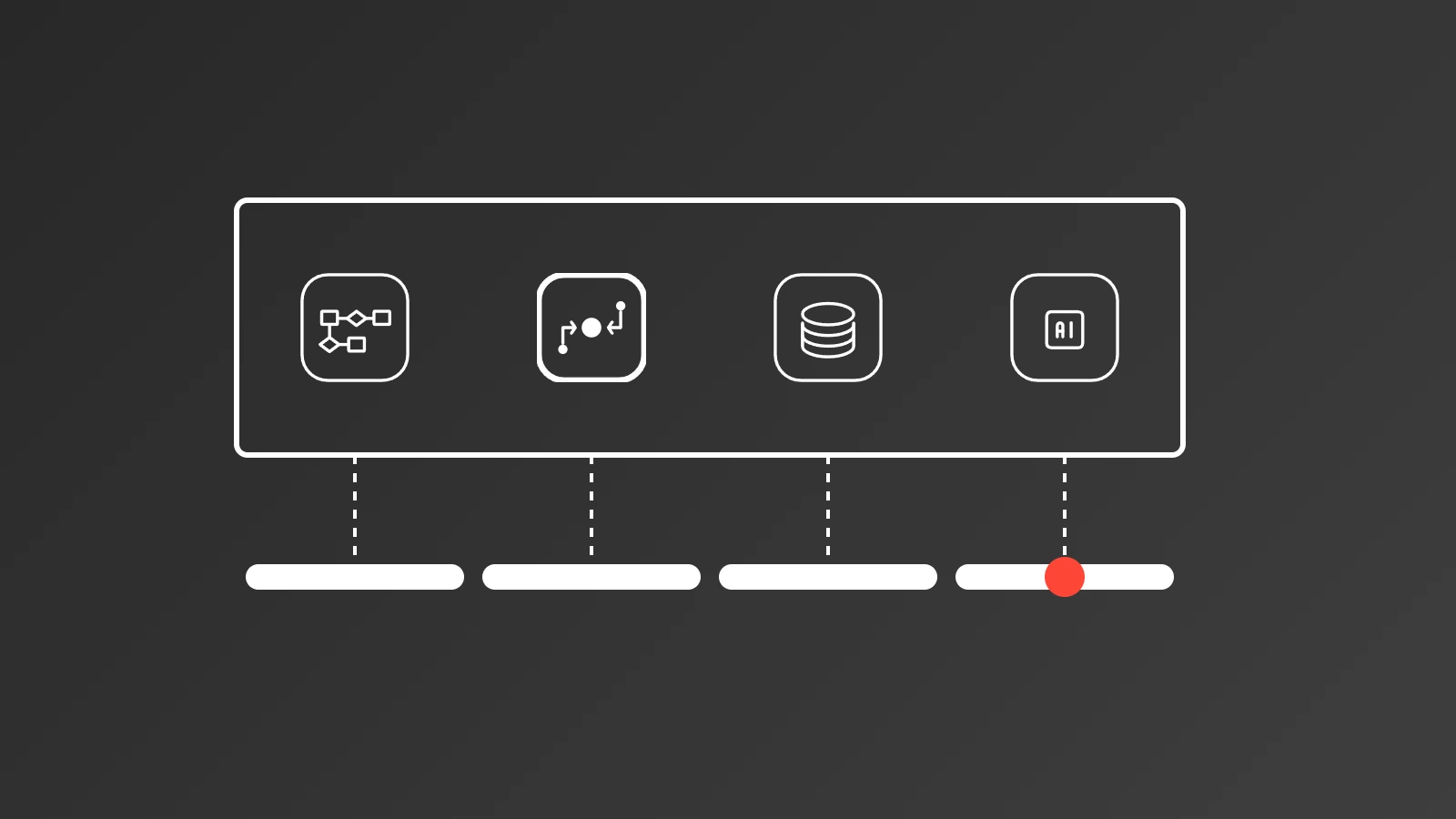
This is precisely what Agentic Process Orchestration aims to achieve: workflows, data, APIs, and AI agents are brought together in a unified execution. At Scheer PAS, the process engine is the component that executes processes and controls data flows; BPMN can transparently map the process logic. Further information on this approach can be found on the Scheer PAS page on Agentic Process Orchestration.
This approach is particularly effective when:
- Processes connect multiple systems and teams,
- Processes run for days, weeks, or months,
- Agents are required to act in a controlled manner,
- Human decisions are part of the workflow,
- Permissions and data flows must be controlled,
- Evidence is required for audits, reviews, or compliance,
- Companies want to build an operational process rather than individual demos.
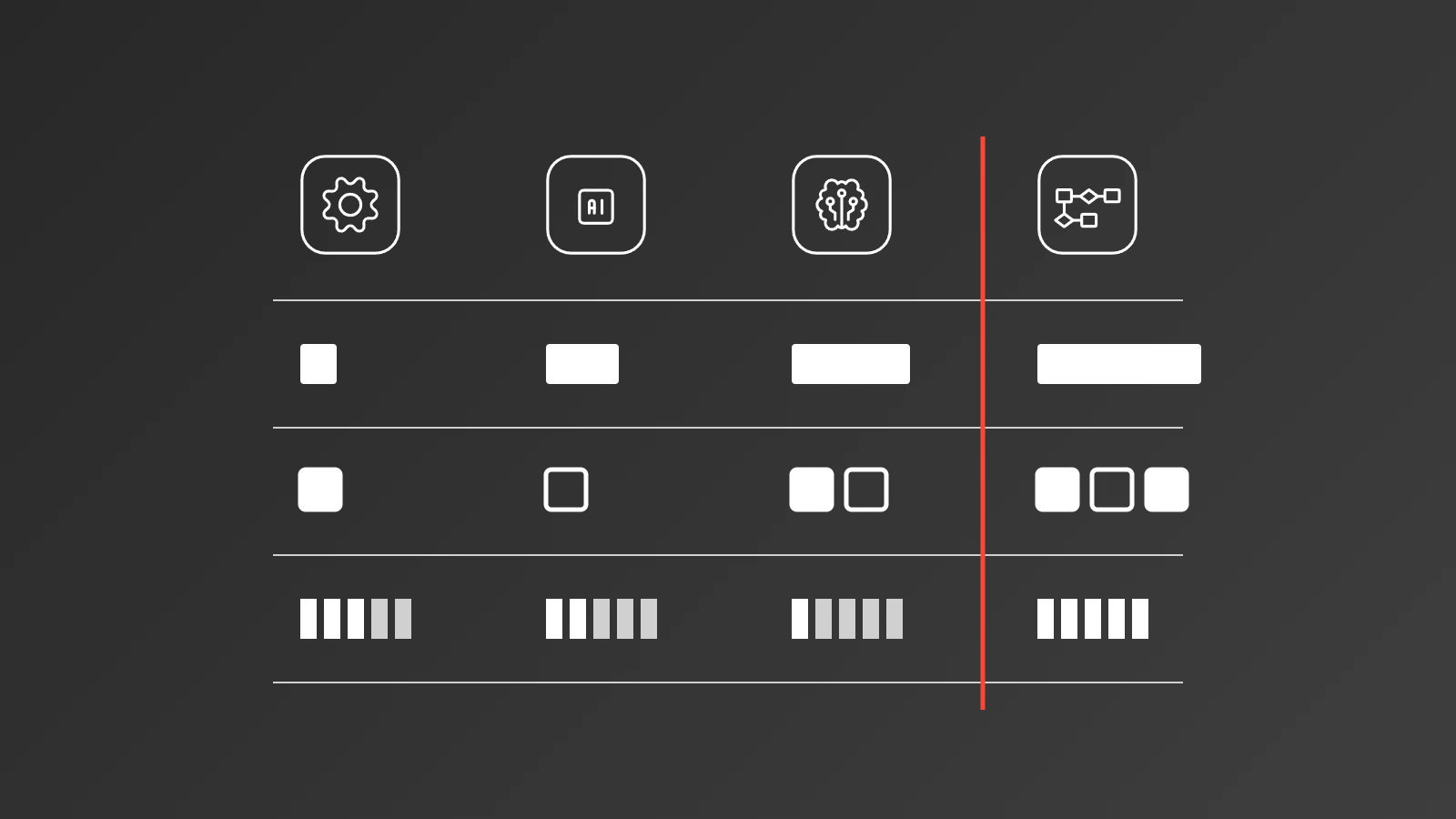
The four approaches compared
| Criterion | Rule-based automation | Single AI agent | Orchestrator agent | Agents orchestrated by a process engine |
|---|---|---|---|---|
| Suitable use case | Clear, repeatable steps | Defined tasks involving language or documents | Variable, multi-step knowledge work | End-to-end processes across teams and systems |
| Decision logic | Predefined | Context-dependent within a task | Context-dependent across multiple subtasks | Process rules plus targeted agent decisions |
| Data | Predominantly structured | Often unstructured | Structured and unstructured | Both, across integrated systems |
| Runtime | Seconds to minutes | Usually seconds to minutes | Minutes to limited case handling | Days, weeks or months |
| Handling exceptions | Add a rule or hand over to a person | Agent flags, explains or prepares for the exception | Agent decides or asks for clarification | Process controls exception handling, approval and escalation |
| Human-in-the-loop | For defined approvals | Often useful | Required for high-risk decisions | Integral part of the process model |
| Traceability | High, if rules are documented | Dependent on logging and output format | More complex, as planning and tool use can vary | Process history, roles, steps and agent actions can be brought together |
| Typical limitation | Not well suited to unstructured cases | Not a replacement for long-running processes | More difficult to operate with many cases and responsibilities | Higher architectural and implementation effort |
The actual design decision
It’s not about deploying as many agents as possible. It’s about drawing the line clearly.
An agent is appropriate where context, interpretation, or judgment is required. Rule-based automation is appropriate where unambiguity is key. The process engine belongs where a process must be managed across time, systems, roles, and decisions.
The question of data must also be addressed at the outset: What information does the agent really need? From which sources does it come? What data is permitted to leave the company or a specific system boundary? And what actions may an agent perform without human approval?
These questions determine whether a compelling prototype will become an operational process.
After all, an AI agent can solve a task. A company must take responsibility for processes.
One need only consider what a business process actually defines. It determines where information enters the system, how a decision is made, which systems an agent is permitted to access, and when an exception must be escalated to a human. Embedding an AI agent within this structure creates genuine operational boundaries without constraining the agent with rigid rules. The process becomes a guardrail. Scheer PAS is built on this principle: agents are participants in orchestrated business workflows, not freely acting, isolated components—ensuring that intelligent automation remains aligned with the organisation’s actual processes and governance standards.
Governance: Built in from the start, not added later
As AI becomes more widespread within an organisation, governance can no longer be put off until later. It must be part of the architecture from the very beginning, just as building codes must be followed as a house is being built, not discovered only during a final inspection when the walls have long since been closed off. This means centralised administration, clearly assigned responsibilities, controlled access, and uniform operational standards wherever AI touches the business.
Scheer PAS supports exactly that, among other things through centralised administration of agents, flexible role and authorisation concepts, configurable process integration, and transparent operational oversight of what’s currently running. The practical benefit is the ability to scale AI across departments and business units without governance fragmenting into a dozen inconsistent siloed solutions.races, giving compliance and IT teams the visibility they need to audit decisions and scale AI consistently across the enterprise.
Why this is especially important in Europe
Companies operating in Europe face additional expectations regarding digital sovereignty, transparency, and the responsible use of AI. As the regulatory framework continues to evolve, companies are looking for technology partners who understand these requirements and provide a sustainable foundation that will endure even as the rules mature. The EU regulatory framework for AI is the key reference point in this regard.
Scheer PAS was designed from the outset for complex enterprise environments where governance, transparency, and process excellence are essential. By unifying process orchestration, integration, API management, and AI in a single environment, the platform provides companies with a controlled framework to introduce autonomous capabilities into existing processes without relinquishing operational control.
A platform that builds trust
The future of enterprise AI is not determined solely by which model is the most intelligent. It is determined by how well companies can control, orchestrate, and integrate autonomous capabilities into real-world operations. Powerful technology alone will not get you there. It requires transparency, structured execution, human oversight, and governance that was planned from the outset—not added as an afterthought under pressure.
That is why Scheer PAS approaches Agentic AI from a process perspective. When workflows, APIs, data integration, and AI agents coexist within a controlled orchestration platform, a company can transition from traditional automation to truly autonomous process execution while maintaining the visibility and control it relies on. In the era of Agentic AI, trust isn’t a feature added on top. It is the platform itself.
FAQ on process automation
AI process orchestration refers to the practice of embedding AI agents into structured, controlled business processes rather than allowing them to act independently. The orchestration layer defines where information enters, which systems an agent is allowed to access, when a human must approve a step, and how each action is logged, ensuring that the AI’s flexibility remains within clear operational boundaries.
Yes, provided the AI operates within an orchestration layer that enforces security boundaries, human approval points, and comprehensive execution logging. The risk stems from unsupervised autonomy, not from automation itself. When agents are confined to defined processes and every action is traceable, organisations reap the productivity gains without relinquishing control.
Human-in-the-loop allows an organisation to specify exactly which steps require human review or approval before the process continues. Routine, low-risk actions run automatically, while decisions with regulatory, financial, or strategic implications are escalated to a human—all within the same workflow.
Because the orchestration layer is where governance is actually enforced. It provides centralised administration, role-based access, and complete execution traces, giving compliance and IT teams the visibility they need to audit decisions and scale AI consistently across the enterprise.

